
ISO-certified wet wipes OEM manufacturer since 1994. Baby, adult, cleaning, household & pet wipes. MOQ 30,000 packs, custom formula & packaging. Free samples.
Wet Wipes OEM & Private Label: The Complete Guide for Importers & Brand Owners
Wet wipes are one of the fastest-growing segments in disposable hygiene. From baby wipes and adult personal care wipes to disinfectant surface wipes, household cleaning wipes and pet grooming wipes, global demand continues to expand — and private-label brands are capturing an increasing share of that growth.
For importers, distributors and brand owners, choosing the right wet wipes OEM manufacturer is the single most important decision in launching a wipes line. This guide covers everything you need to know: product categories, OEM vs ODM vs private label, the manufacturing process, raw materials, certifications, MOQ and pricing, custom packaging, quality control, and how to vet a factory — with a focus on what China-based OEM partners like New Yifa Group can deliver.
1. Wet Wipes Product Categories
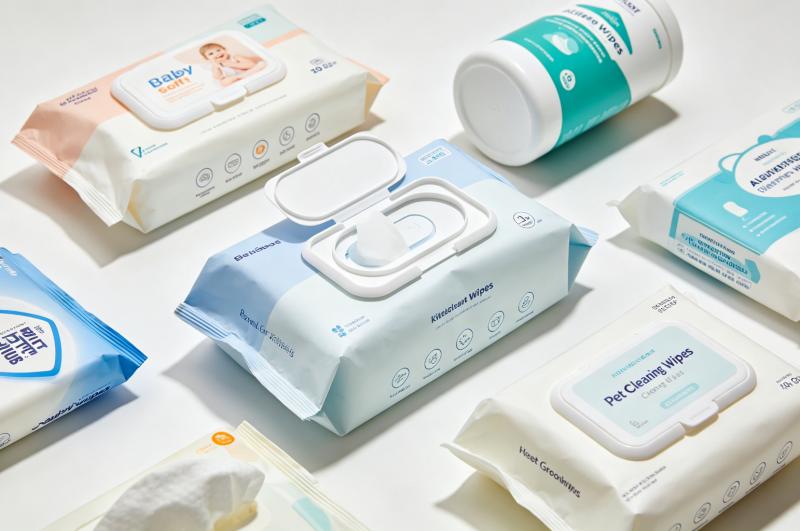
Wet wipes are not a single product. Different categories require different formulations, substrate weights, packaging formats and regulatory compliance. A capable OEM factory should offer all of the following:
Baby Wipes
The largest wipes category. Typically 40–80 gsm spunlace nonwoven, alcohol-free and pH-balanced lotion with aloe vera, chamomile or vitamin E. Available in soft packs with flip-top lids, canisters, and travel packs. Key buyer concerns: hypoallergenic formulation, dermatological testing, and plastic-free or biodegradable substrate options.
Adult & Personal Care Wipes
Includes intimate wipes, body cleansing wipes, and incontinence care wipes. Often paired with adult diaper and underpads lines. Formulations may include pH-balanced cleansing lotion, aloe, or antibacterial agents. Packaging ranges from single-use sachets to resealable flow packs.
Cleaning & Disinfectant Wipes
Surface disinfectant wipes, antibacterial wipes, and multi-surface cleaning wipes for household, food service, hospital and industrial use. These require higher chemical loadings (quaternary ammonium, isopropyl alcohol, or hydrogen peroxide formulations) and may need EPA, FDA or CE registration depending on the destination market.
Household Wipes
Kitchen wipes, floor wipes, glass wipes, furniture polish wipes, and shoe cleaning wipes. Often heavier substrates (60–100 gsm) with textured embossing for scrubbing. Private-label household wipes are a high-volume, low-margin category where packaging design and shelf presence matter.
Pet Wipes
Dog and cat grooming wipes, paw cleaning wipes, and deodorizing wipes. Formulations are pet-safe (alcohol-free, pH-balanced for animal skin) and may include oatmeal, aloe or tea tree oil. Growing category in North America and Europe.
Functional & Specialty Wipes
Makeup removal wipes, insect repellent wipes, sunscreen wipes, cooling wipes, lens cleaning wipes, and industrial hand wipes. These are niche but high-margin, and often require custom formulation development (ODM).
2. OEM, ODM and Private Label: Which Model Fits Your Wipes Brand?
Three production models dominate the wipes industry. Understanding the difference prevents costly misalignment:
| Model | What You Provide | What the Factory Provides | Best For |
|---|---|---|---|
| OEM | Product spec, formula, packaging design, brand | Manufacturing, QC, packaging, export docs | Brands with an existing formula or clear spec |
| ODM | Market positioning, target price, packaging preferences | Formula development, substrate selection, full product design | New brands or entries into a new wipes category |
| Private Label | Brand name, logo, packaging artwork | Ready-made formulas, standard SKUs, fast turnaround | Retailers, distributors, supermarket chains |
For most first-time wipes buyers, ODM or private label is the practical starting point — the factory brings proven formulations and you bring the brand. OEM becomes relevant once you have a validated formula and want to lock in proprietary specifications.
3. Wet Wipes Manufacturing Process
A modern wet wipes production line combines nonwoven converting, lotion impregnation, folding, cutting and packaging in a single high-speed process. Here is what happens inside the factory:
- Raw material preparation — Spunlace nonwoven rolls (viscose/polyester blend), lotion concentrates, packaging film and labels are inspected and loaded.
- Lotion mixing — Deionized water is blended with active ingredients, preservatives, humectants and fragrance in a stainless-steel mixing tank. Batch testing confirms pH, viscosity and microbial count.
- Nonwoven converting — The substrate is unwound, embossed (optional), and slit to the required wipe width.
- Impregnation — The nonwoven passes through a lotion bath or spray system, achieving a controlled lotion-to-substrate ratio (typically 2.0–3.5x the dry weight).
- Folding & cutting — Wipes are folded (Z-fold, N-fold or cross-fold) and cut to size.
- Packaging — Stacked wipes are inserted into flow packs, canisters or tubs; the flip-top lid or resealable label is applied; lot number and expiry date are printed.
- QC & packing — Finished packs undergo weight check, seal integrity test, and visual inspection before carton packing and palletization.
A high-speed line can produce 80–120 packs per minute. For private-label buyers, the critical quality gates are lotion ratio consistency, seal integrity (to prevent drying out), and microbial control.
4. Raw Materials: What to Spec
The cost and quality of a wet wipe are determined by three material choices. Specify these in your purchase order:
Substrate (Nonwoven)
- Spunlace nonwoven — the standard for baby, adult and personal care wipes. Viscose (rayon) gives softness and absorbency; polyester adds strength. Common blends: 70/30 viscose/polyester, 50/50, or 100% viscose for premium.
- Weight — 40 gsm (economy baby wipes), 50–60 gsm (standard), 70–100 gsm (premium/household scrubbing wipes).
- Biodegradable options — 100% viscose, bamboo fiber, or plant-based substrates for eco-label positioning.
Lotion (Impregnation Solution)
- Base — Deionized or RO-purified water (90–98% of lotion).
- Humectants — Glycerin, propylene glycol, sorbitol (keep skin moist).
- Surfactants — Mild cleansers (decyl glucoside, PEG-80 sorbitan laurate).
- Preservatives — Phenoxyethanol, sodium benzoate, potassium sorbate, or parabens (avoid for premium/baby lines).
- Actives — Aloe vera, chamomile, vitamin E, oatmeal, tea tree oil, or antibacterial agents (depending on category).
- pH — 5.0–6.0 for baby/personal care (skin-compatible); higher for cleaning/disinfectant.
Packaging
- Flow pack (soft pack) — most common, with flip-top hard lid or resealable sticker label.
- Canister/tub — for household, industrial and disinfectant wipes; dispenses one wipe at a time.
- Single-use sachet — for travel, restaurant, and hospitality.
- Film material — PET/PE or PE/EVOH/PE for oxygen/moisture barrier; custom printed in up to 8 colors.
5. Certifications & Regulatory Compliance
Wipes are regulated differently depending on category and destination. Verify these before placing an order:
- ISO 9001 — quality management system (all categories).
- ISO 13485 — medical device quality management (relevant for hospital/medical wipes).
- CE marking — required for products sold in the EU; disinfectant wipes may fall under the Biocidal Products Regulation (BPR).
- FDA registration — for wipes marketed in the US; antibacterial wipes may require EPA registration as a pesticide.
- OEKO-TEX Standard 100 — textile safety certification for the nonwoven substrate (relevant for baby and premium lines).
- GMP / GMPC — good manufacturing practice for cosmetics and personal care wipes.
- Microbial test reports — total aerobic count, yeast/mold, and specific pathogens (E. coli, Staph aureus, Pseudomonas aeruginosa) per batch.
Always ask the factory for the actual certificate numbers and verify them with the issuing body — a certificate on the wall is not the same as valid, in-scope certification for your product category.
6. MOQ, Pricing & Lead Time
These three numbers determine whether your launch is viable. Typical ranges for a China-based wet wipes OEM:
| Parameter | Typical Range | Notes |
|---|---|---|
| MOQ | 30,000 packs per SKU | Lower for standard private-label SKUs; higher for custom formula or custom packaging film (film printing MOQ is often the binding constraint, ~300–500 kg of film). |
| Unit price (FOB) | $0.03–$0.15 per pack | Depends on substrate weight, lotion formulation, pack size, and print complexity. Economy baby wipes (40 gsm, 80-pack) at the low end; premium organic or disinfectant at the high end. |
| Lead time | 25–40 days | From artwork confirmation to container loading. Custom formula development adds 10–20 days. Reorders of existing SKUs are faster (15–25 days). |
| Payment terms | 30% deposit / 70% before shipment | TT is standard. L/C at sight for larger orders or first-time buyers after credit check. |
Cost-saving tip: Mix multiple SKUs in one container to lower the effective per-SKU MOQ. A 20-foot container holds roughly 30,000–50,000 packs of standard baby wipes; a 40-foot HQ holds 60,000–90,000. Mixing baby, adult and household wipes in one container is common for distributors entering multiple categories.
7. Custom Packaging & Branding
For private-label wipes, packaging is the product. A good OEM partner offers:
- Custom film printing — up to 8-color rotogravure or flexo printing on PET/PE or PE/EVOH/PE film. Provide artwork in AI or PDF with 3 mm bleed and CMYK color mode.
- Flip-top lids — custom-colored hard lids with embossed logo. Standard lids are white or transparent; custom color requires a larger MOQ.
- Labeling — resealable sticker labels for economy packs; full-wrap labels for canisters.
- Carton & pallet — custom-printed shipping cartons with your brand, barcode (EAN/UPC), and regulatory markings (CE, FDA, recycling symbols).
- Regulatory artwork review — the factory should review your artwork for compliance with destination-market labeling requirements (ingredient list in local language, warning statements, manufacturer info).
8. Quality Control & Factory Audit
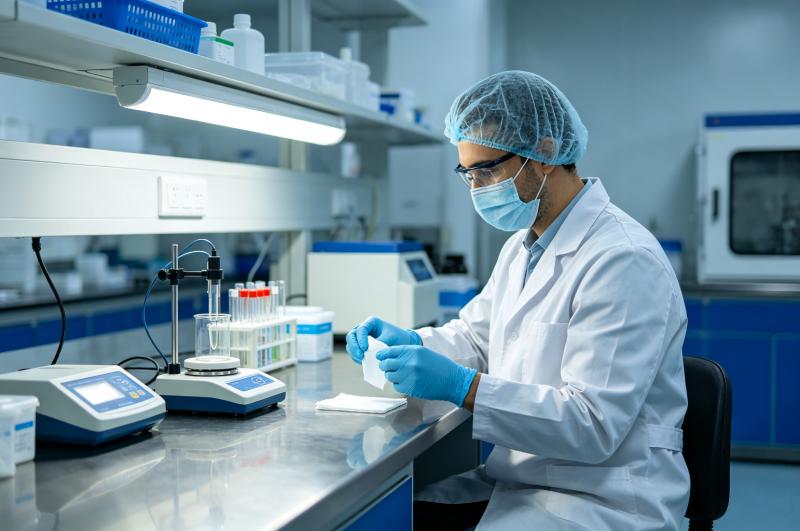
Before placing a first order, conduct or request the following:
- Pre-production samples — request 3–5 sample packs with your actual formula and packaging. Evaluate softness, lotion ratio, scent, seal quality, and packaging print.
- In-process QC — ask for the factory's QC checklist: substrate weight tolerance (±5%), lotion ratio (±10%), pH (±0.5), seal strength, and microbial testing per batch.
- Pre-shipment inspection — hire a third-party inspector (SGS, Intertek, BV) or conduct your own AQL 2.5 inspection before the container is sealed.
- Factory audit — if you cannot visit, request a virtual factory tour or a recent third-party audit report (BSCI, Sedex, SMETA, or Walmart/Disney-style ethical audit).
- Batch traceability — confirm the factory can trace each production batch to raw material lot numbers, in case of a recall.
9. How to Choose a Wet Wipes OEM Manufacturer
Use this 10-point checklist to compare factories:
- Product range — Can they make all the wipe categories you plan to sell? (Baby, adult, cleaning, household, pet?) A one-stop factory simplifies sourcing and container consolidation.
- Production capacity — How many automatic wipes lines? Can they scale to your volume without delaying other customers?
- Cleanroom standard — Is production in a 100,000-level (Class 100k) cleanroom? Critical for baby and personal care wipes.
- Certifications — Valid ISO 9001, ISO 13485 (if medical), CE, FDA, OEKO-TEX? Verify certificate numbers.
- Formulation capability — Do they have an in-house R&D lab for custom formula development? Can they adjust pH, lotion ratio, and active ingredients to your spec?
- Export experience — Which countries do they currently export to? Do they understand EU BPR, US EPA/FDA, and Middle East SFDA requirements?
- MOQ flexibility — Can they mix SKUs in one container? What is the film printing MOQ?
- Quality records — Ask for recent batch test reports (microbial, pH, lotion ratio) and any customer complaint/return rate.
- Ethical & social compliance — BSCI/Sedex audit, no child labor, fair wages. Important for EU and US retail buyers.
- Communication — Do they respond within 24 hours? Is there an English-speaking sales/technical contact? Poor communication is the #1 cause of OEM delays.
10. Frequently Asked Questions
Q: Can I get free samples before ordering?
A: Yes. Most factories provide free pre-production samples; you pay courier cost. For custom formula samples, a small sample fee may apply and is usually credited against the first order.
Q: What is the minimum order for custom packaging?
A: The binding constraint is usually the packaging film printing MOQ (~300–500 kg), which translates to roughly 30,000–50,000 packs. Standard private-label SKUs using the factory's existing film can have lower MOQs.
Q: Are flushable wipes really flushable?
A: True flushable wipes must pass the INDA/EDANA flushability guidelines (including disintegration and sewer-line tests). Many "flushable" wipes on the market do not pass these tests. If you plan to market flushable wipes, require third-party flushability certification and be aware of municipal wastewater regulations in your market.
Q: Can the factory handle alcohol-based disinfectant wipes?
A: Yes, but alcohol-based wipes require explosion-proof production equipment and fire-safety certification. Not all wipes factories are equipped for this. Confirm the factory has alcohol-handling capability before specifying isopropyl or ethanol formulations.
Q: How long does a private-label wipes brand take to launch?
A: From first inquiry to first container arrival: typically 60–90 days. This includes 1–2 weeks for sampling and spec confirmation, 1–2 weeks for artwork, 25–40 days production, and 20–35 days ocean freight (varies by destination).
11. Ready to Start Your Wet Wipes Private Label?
New Yifa Group is a China-based wet wipes OEM and private label manufacturer with over 30 years of experience in disposable hygiene products. We operate 68 automatic production lines in a 100,000-level cleanroom, serving importers and brands in 80+ countries. Our wipes portfolio covers baby wipes, adult personal care wipes, disinfectant cleaning wipes, household wipes, and pet wipes — all available for OEM, ODM or private label.
Explore our wipes product lines:
- Baby Wipes OEM — alcohol-free, hypoallergenic, aloe vera & chamomile formulations
- Adult Wipes OEM — intimate, body cleansing, and incontinence care wipes
- Disinfectant & Cleaning Wipes — 99.999% kill rate, hospital & food service grade
- Household Wipes — kitchen, floor, glass, and multi-surface wipes
- Pet Wipes OEM — dog & cat grooming, paw cleaning, deodorizing
Related guides:
- Baby Diaper OEM Manufacturer — pair baby wipes with diapers for a complete baby care line
- Adult Diaper OEM Manufacturing — adult wipes + adult diapers + underpads for incontinence care bundles
- OEM/ODM Customization Service — one-stop private label for diapers, wipes and tissue paper
Contact us for free samples, a detailed quotation, and a factory audit. Our team responds within 24 hours with MOQ, lead time and FOB Xiamen pricing tailored to your wipes line.