
Complete OEM guide for adult pull up diapers from a China manufacturer. Covers product types, absorbency, sizing, materials, certifications, MOQ, cost, private label and factory selection.
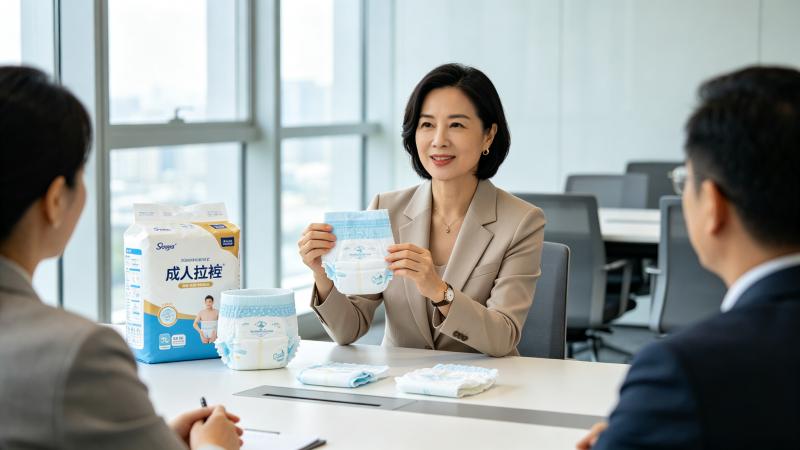
Adult pull up diapers — also called adult incontinence underwear, protective underwear, or pull-on briefs — are the fastest-growing segment of the global adult incontinence product market. Unlike traditional adult briefs with side tabs, pull up diapers look and wear like regular underwear, making them the preferred choice for active users who value discretion, dignity, and ease of use. For brands, importers, and distributors looking to enter this market, sourcing OEM adult pull up diapers from a China manufacturer offers significant cost advantages, flexible customization, and access to mature supply chains. However, selecting the right OEM partner requires a thorough understanding of product specifications, manufacturing capabilities, quality certifications, and commercial terms.
This guide is the pillar page for our content cluster on OEM adult pull up diapers manufacturer. It provides a comprehensive overview of everything a buyer needs to know, with links to in-depth articles on sizing, materials, market opportunity, quality standards, and production process.
What Are Adult Pull Up Diapers?
Adult pull up diapers are disposable absorbent underwear designed for adults with urinary or fecal incontinence. They combine the absorbent core of a diaper with the convenience and discretion of underwear: a stretchable waistband, soft leg cuffs, and a tear-away side seam for easy removal. Unlike tab-style briefs that require caregiver assistance to put on and take off, pull up diapers can be pulled up and down like regular underwear, making them ideal for users who are mobile and capable of self-toileting.
The global adult incontinence product market was valued at approximately $12.6 billion in 2024 and is projected to grow at a CAGR of 6.2% through 2030, driven by aging populations in North America, Europe, and Asia Pacific, increasing awareness of incontinence as a treatable medical condition, and growing preference for discreet, underwear-style products. Pull up diapers account for approximately 35-40% of the total adult incontinence product market by value, with their share growing faster than tab-style briefs due to consumer preference for active-lifestyle products. Source: Grand View Research
Anatomy of an Adult Pull Up Diaper
Understanding the construction of an adult pull up diaper is essential for specifying product requirements and evaluating manufacturer capabilities. A typical pull up diaper consists of the following layers and components, from inside to outside:
- Top sheet (inner layer): The layer that contacts the user's skin. Typically made of hydrophilic non-woven fabric (spunbond or hot-air through-bonded) that allows liquid to pass through quickly while remaining dry to the touch. Premium products use softer, higher-basis-weight non-woven (18-25 gsm) for improved comfort.
- Acquisition layer (ADL): A layer of porous non-woven or tissue that rapidly absorbs liquid from the top sheet and distributes it into the absorbent core below. The ADL prevents liquid from pooling on the surface and reduces rewet.
- Absorbent core: The heart of the diaper, responsible for absorbing and retaining liquid. Typically composed of a blend of fluff pulp (cellulose fiber) and superabsorbent polymer (SAP, sodium polyacrylate). The core may be wrapped in tissue or a non-woven envelope to contain the SAP and pulp. Premium products use a "sandwich" core construction with SAP distributed in multiple layers for faster absorption and higher capacity.
- Back sheet (outer layer): The waterproof outer layer that prevents liquid from leaking through. Typically made of polyethylene (PE) film or a breathable composite (PE film laminated with non-woven). Premium products use breathable backsheets that allow air circulation while remaining liquid-proof, reducing the risk of skin irritation and improving comfort.
- Elastic waistband: A wide, stretchable panel at the waist that provides a snug, comfortable fit. Typically constructed with multiple elastic strands (5-15 strands of Lycra or spandex) sandwiched between non-woven layers. The waistband stretches 2-3 times its resting length and must maintain elasticity after repeated wear.
- Leg cuffs (standing gathers): Elasticated barriers at the leg openings that prevent side leakage. Typically constructed with elastic strands (2-4 per cuff) attached to a non-woven flap that stands up when the diaper is worn. Soft, flexible leg cuffs are critical for both leakage protection and comfort, as rigid cuffs can cause skin irritation and marks.
- Tear-away side seams: Perforated or weakened seams on both sides that allow the diaper to be torn open for easy removal, particularly useful for users with limited mobility or for caregiver-assisted changes. The seams must be strong enough to remain intact during wear but easy to tear when removal is needed.
Product Types and Absorbency Levels
Adult pull up diapers are available in several product types and absorbency levels, designed for different user needs and usage scenarios.
By Absorbency Level
- Light absorbency: Designed for users with light urinary incontinence (small leaks, stress incontinence). Absorbent capacity typically 400-700ml. Suitable for daytime use by active users. Thinner profile for discretion under clothing.
- Moderate absorbency: The most common level, designed for users with moderate urinary incontinence (regular leaks, urge incontinence). Absorbent capacity typically 800-1,200ml. Suitable for daytime use and short overnight use. Balanced profile between discretion and protection.
- Heavy absorbency: Designed for users with heavy urinary incontinence or light fecal incontinence. Absorbent capacity typically 1,300-1,800ml. Suitable for extended daytime use and overnight use. Thicker profile for maximum protection.
- Maximum/overnight absorbency: Designed for users with severe incontinence or for overnight use (8-12 hours). Absorbent capacity typically 1,900-2,500ml. Thickest profile with extra-wide core and additional leg cuffs. May include wetness indicator and odour control features.
By User Segment
- Unisex: The most common type, designed to fit both men and women. Absorbent core is centered for universal protection.
- Men's specific: Designed with an absorbent core positioned toward the front for male anatomy. May include a contoured front panel and masculine color options (grey, navy, black).
- Women's specific: Designed with an absorbent core positioned toward the center for female anatomy. May include a more contoured fit and feminine color options (pink, lavender, white).
- Bariatric/plus size: Designed for larger users (waist 140cm+), with wider core, stronger elastic, and reinforced side seams. Sizes typically XXL and XXXL.
Sizing and Fit
Proper sizing is critical for both leakage protection and user comfort. Adult pull up diapers are typically sized by waist or hip measurement, rather than by weight alone, because body shape varies significantly between individuals. Most manufacturers offer 4-6 standard sizes:
| Size | Waist/Hip Measurement | Typical User Weight |
|---|---|---|
| S / Small | 60-80 cm (24-31 in) | 40-60 kg |
| M / Medium | 80-100 cm (31-39 in) | 55-80 kg |
| L / Large | 100-120 cm (39-47 in) | 75-100 kg |
| XL / Extra Large | 120-140 cm (47-55 in) | 95-125 kg |
| XXL / 2XL | 140-160 cm (55-63 in) | 120-150 kg |
| XXXL / 3XL | 160-180 cm (63-71 in) | 145-180 kg |
When specifying sizing for OEM production, confirm the measurement method (waist vs. hip, relaxed vs. stretched), the elastic stretch ratio, and the fit tolerance. A well-fitting pull up diaper should feel snug but not tight, with the waistband sitting at the natural waist and the leg cuffs fitting smoothly without gaps or digging. For a detailed guide to sizing and absorbency specification, see our article on Adult Pull Up Diaper Sizing & Absorbency for OEM Buyers.
Materials and Quality Considerations
The quality of an adult pull up diaper is determined primarily by the quality of its raw materials. As an OEM buyer, specifying the right materials — and verifying that the manufacturer actually uses them — is the most important factor in product quality.
Superabsorbent Polymer (SAP)
SAP is the most expensive and most performance-critical raw material in an adult pull up diaper. It is responsible for absorbing and retaining liquid, converting it to a gel that cannot leak back out. High-quality SAP (typically from suppliers like BASF, Evonik, or Sumitomo) has high absorption capacity (300-500 g/g for deionized water, 40-60 g/g for 0.9% saline), high absorption rate, and good gel strength (resistance to deformation under pressure). Low-quality or recycled SAP has lower capacity, slower absorption, and poor gel strength, leading to leakage and rewet. SAP content in adult pull up diapers typically ranges from 8g (light absorbency) to 25g (maximum/overnight) per piece.
Fluff Pulp
Fluff pulp provides the structural matrix of the absorbent core, distributing liquid and holding the SAP in place. High-quality fluff pulp (typically from Nordic or Canadian softwood suppliers) has high fiber length, high absorbency, and low impurity content. Low-quality pulp may contain dust, bark, or other impurities that can cause skin irritation or affect absorption. Fluff pulp content typically ranges from 10g (light) to 30g (maximum) per piece.
Non-Woven Fabrics
Non-woven fabrics are used for the top sheet, leg cuffs, waistband, and core wrap. The quality of non-woven affects softness, comfort, and skin friendliness. Premium products use hot-air through-bonded (through-air) non-woven for the top sheet, which is softer and more cloth-like than standard spunbond non-woven. Basis weight for top sheet non-woven typically ranges from 15 gsm (value) to 25 gsm (premium). For users with sensitive skin, specify hypoallergenic, latex-free, and fragrance-free non-woven materials.
Back Sheet
The back sheet must be 100% waterproof while remaining comfortable. Standard PE film backsheets are low-cost and effective but can trap heat and moisture against the skin. Breathable composite backsheets (PE film micro-perforated or laminated with non-woven) allow air and moisture vapor to pass through while remaining liquid-proof, reducing the risk of diaper rash and skin irritation. For premium or medical-grade products, specify breathable backsheets.
For a detailed guide to material specification and comfort features, see our article on Materials & Comfort in OEM Adult Pull Up Diapers.
Certifications and Quality Standards
Adult pull up diapers are classified as medical devices in many markets, requiring specific certifications and quality management systems. When evaluating an OEM manufacturer, verify that they hold the certifications required for your target market and that their quality management system covers the full production process from raw material incoming inspection to finished product testing.
Key Certifications
- ISO 13485: Quality management system for medical devices. This is the most important certification for adult incontinence product manufacturers, as it demonstrates that the factory operates a quality management system specifically designed for medical device production. ISO 13485 standard
- ISO 9001: General quality management system certification. While not specific to medical devices, ISO 9001 demonstrates a baseline level of quality management.
- CE marking (EU): For products sold in the European Union, adult pull up diapers are typically classified as Class I medical devices (non-sterile, non-measuring), requiring a Declaration of Conformity and compliance with the Medical Device Regulation (MDR 2017/745). The manufacturer must maintain a technical file and register with the relevant EU authority.
- FDA registration (US): For products sold in the United States, adult pull up diapers are classified as Class I medical devices (510(k) exempt for most types), requiring establishment registration and device listing with the FDA. The manufacturer must comply with Quality System Regulation (QSR, 21 CFR Part 820).
- Biocompatibility testing: ISO 10993-5 (cytotoxicity), ISO 10993-10 (skin irritation and sensitization). These tests verify that the materials in contact with the user's skin do not cause adverse reactions.
- REACH compliance (EU): Registration, Evaluation, Authorization and Restriction of Chemicals. Verify that all materials and inks comply with REACH substance restrictions, including phthalates, heavy metals, and other restricted substances.
Production Quality Control
Beyond certifications, evaluate the manufacturer's in-process quality control procedures: raw material incoming inspection (SAP absorption rate, pulp impurity content, non-woven basis weight), in-process inspection (core weight, SAP distribution, elastic tension, product dimensions), and finished product testing (absorption capacity, rewet, leakage, tensile strength). Request quality control records and test reports for previous production runs to verify that the manufacturer consistently meets specifications.
For a detailed guide to quality standards and certification verification, see our article on Quality Standards & Certifications for Adult Pull Up Diapers.
OEM vs. Private Label: Understanding the Difference
When sourcing adult pull up diapers from a China manufacturer, you will encounter two primary business models: OEM (Original Equipment Manufacturer) and private label. While the terms are sometimes used interchangeably, they represent different levels of customization and brand control.
OEM Manufacturing
In an OEM arrangement, the buyer provides product specifications (materials, dimensions, absorbency, features) and the manufacturer produces the product according to those specifications. The product may carry the buyer's brand, but the core product design and manufacturing process are controlled by the manufacturer. OEM is suitable for buyers who want a specific product configuration but do not need to develop a completely unique product from scratch. Most China adult diaper manufacturers operate primarily on an OEM basis, offering a range of standard product configurations that can be customized with the buyer's branding and packaging.
Private Label
Private label is a subset of OEM where the buyer's brand is applied to the manufacturer's existing product designs. The buyer selects from the manufacturer's standard product catalog, specifies branding (product name, logo, packaging design), and the manufacturer produces the product under the buyer's brand. Private label is the fastest and lowest-cost way to enter the market, as it requires no product development or custom tooling. However, the product will be identical or very similar to other brands using the same manufacturer's standard designs, limiting differentiation.
Custom Development (ODM)
For buyers who want a truly unique product, some manufacturers offer ODM (Original Design Manufacturer) services, where the manufacturer develops a custom product design based on the buyer's requirements. This may include custom core construction, unique features (e.g., wetness indicator, odour control layer, custom elastic configuration), and custom packaging structures. ODM requires higher MOQ, longer lead time, and additional development costs, but offers maximum product differentiation.
For most first-time buyers, private label or standard OEM is the recommended starting point. As sales volume grows and market feedback is gathered, custom development can be considered for product differentiation.
MOQ, Cost, and Commercial Terms
Minimum Order Quantity (MOQ)
MOQ for adult pull up diapers varies by manufacturer and product configuration. Standard private label products (manufacturer's existing design, custom packaging only) typically have an MOQ of 50,000-100,000 pieces per size. Custom OEM products (custom material specifications, custom core construction) typically have an MOQ of 100,000-200,000 pieces per size. Fully custom ODM products may require 200,000-500,000 pieces per size. Most manufacturers offer combined MOQ across sizes (e.g., 200,000 total pieces across 4 sizes) for first-time orders.
Unit Cost
EXW (Ex Works) unit cost for adult pull up diapers from a China manufacturer ranges from $0.08 to $0.25 per piece, depending on size, absorbency level, and material quality. Reference ranges (as of 2026):
- Light absorbency, value materials: $0.08-$0.12
- Moderate absorbency, standard materials: $0.12-$0.17
- Heavy absorbency, premium materials: $0.17-$0.22
- Maximum/overnight, premium materials: $0.20-$0.25
These are reference ranges; actual costs depend on raw material market prices (SAP, pulp, oil), order volume, and negotiation. Larger sizes (XL, XXL) cost more due to higher material content. Custom features (breathable backsheet, wetness indicator, odour control) add $0.01-$0.05 per piece.
Commercial Terms
- Payment terms: Typically 30% deposit upon order confirmation, 70% balance before shipment (T/T). For established relationships, some manufacturers offer L/C at sight or 30-60 day credit terms.
- Incoterms: EXW (factory pickup) is most common for first-time orders; FOB (port of shipment, typically Xiamen or Shanghai) is common for larger orders; CIF/CIP includes freight and insurance to destination port.
- Lead time: 30-45 days for standard private label orders (including sample approval), 45-60 days for custom OEM orders, 60-90 days for ODM custom development.
- Sample cost: $50-$200 for standard samples (including international shipping), typically refundable upon order placement. Custom development samples may cost $200-$500.
For a detailed guide to production process, lead time, and quality control, see our article on OEM Adult Pull Up Diaper Production & Lead Time Process.
How to Choose the Right China Manufacturer
Selecting the right OEM manufacturer is the most critical decision for a brand entering the adult pull up diaper market. Consider the following factors when evaluating potential partners:
Production Capability
- Does the manufacturer operate dedicated adult pull up diaper converting lines? (Some manufacturers produce both baby diapers and adult products on the same lines, which can lead to changeover issues and cross-contamination concerns.)
- What is the production capacity per line per day? (A modern adult pull up diaper line can produce 300-500 pieces per minute, or approximately 300,000-500,000 pieces per day per line.)
- Does the manufacturer have in-house printing capability for custom packaging and backsheet printing? (In-house printing provides better quality control and faster turnaround than outsourced printing.)
- Does the manufacturer have in-house lab testing capability for absorption, rewet, and other performance tests?
Quality Management
- Does the manufacturer hold ISO 13485 certification? Is it current and applicable to adult incontinence products?
- Can the manufacturer provide test reports for raw materials and finished products? (Request recent test reports for SAP absorption rate, biocompatibility, and finished product absorption capacity.)
- What is the manufacturer's defect rate? (A well-managed factory should have a finished product defect rate below 1.5%.)
- Does the manufacturer have a documented non-conformance handling procedure with root cause analysis and corrective action?
Experience and References
- How long has the manufacturer been producing adult pull up diapers? (Look for 5+ years of experience in adult products specifically.)
- What brands or markets does the manufacturer currently supply? (Request references, though manufacturers may not disclose customer names due to confidentiality agreements. Look for export experience to your target market — EU, US, etc.)
- Can the manufacturer provide samples of existing products for evaluation? (Request samples in your target absorbency level and size range, and test them for absorption, fit, comfort, and leakage.)
Communication and Service
- Does the manufacturer have English-speaking sales and technical staff? (Effective communication is critical for specifying requirements, resolving issues, and managing production.)
- What is the response time for inquiries and issue resolution? (A responsive manufacturer should reply to inquiries within 24 hours and resolve production issues within 48 hours.)
- Does the manufacturer assign a dedicated account manager or project manager for your order?
- Is the manufacturer willing to provide factory audit access (in-person or virtual) and share production records?
Location and Logistics
- Where is the factory located? (Fujian province is the primary hub for adult diaper manufacturing in China, with a mature supply chain for raw materials, packaging, and logistics. Other production hubs include Guangdong, Zhejiang, and Shandong.)
- What is the nearest port? (Xiamen port is the primary export port for Fujian manufacturers, with direct shipping routes to major global ports.)
- Does the manufacturer have experience with export documentation and logistics for your target market?
Market Opportunity for Private Label Brands
The adult incontinence product market offers significant opportunity for private label brands, particularly in North America and Europe where branded products (Depend, TENA, Always Discreet) command premium prices and private label penetration remains relatively low compared to other consumer product categories. Key market drivers include:
- Aging population: The global population aged 65+ is projected to grow from 761 million in 2021 to 1.4 billion in 2030, with the fastest growth in the 80+ age group. Incontinence prevalence increases significantly with age, particularly for women (approximately 30-40% of women aged 65+ experience some form of urinary incontinence).
- Stigma reduction: Increasing public awareness and celebrity endorsement of incontinence products are reducing stigma, leading to higher diagnosis rates and product usage. The global adult incontinence product market is projected to grow at 6.2% CAGR through 2030. Source: Grand View Research
- Private label growth: Retailers and DTC brands are increasingly launching private label adult incontinence products to capture margin and build customer loyalty. Private label currently accounts for approximately 15-20% of the North American adult incontinence market, with room for growth as consumers become more price-conscious and retailers expand their health and wellness private label portfolios.
- Online and DTC channels: The growth of e-commerce and DTC (direct-to-consumer) brands has lowered the barrier to entry for new adult incontinence brands. Online sales allow brands to reach consumers directly, build subscription models, and gather product feedback without the need for retail shelf space.
For a detailed market analysis and private label opportunity assessment, see our article on Adult Incontinence Market & Private Label Opportunity.
Getting Started: Step-by-Step Process
For buyers new to OEM adult pull up diaper sourcing, follow this step-by-step process:
- Define product requirements: Determine target market, product type (unisex/men's/women's), absorbency level(s), size range, material specifications, and required certifications. Create a product specification sheet.
- Identify and evaluate manufacturers: Research potential manufacturers (online directories, trade shows, industry referrals), request capability questionnaires, and evaluate based on production capability, quality certifications, experience, and communication.
- Request samples: Request product samples from 3-5 shortlisted manufacturers. Test samples for absorption capacity, rewet, leakage, fit, comfort, and material quality. Compare against branded products in your target market.
- Request quotes: Request detailed quotes from 2-3 preferred manufacturers, including unit cost by size and absorbency, MOQ, lead time, payment terms, sample cost, and any additional fees (plate, tooling, setup).
- Factory audit: Conduct a factory audit (in-person or virtual) to verify production capability, quality management systems, and working conditions. Review quality control records and test reports.
- Custom sample development: Work with the selected manufacturer to develop custom samples based on your specifications. Approve samples with documented specifications and measurement data.
- Packaging design: Develop packaging design (poly bag or carton) with required regulatory labeling, product information, and branding. Submit packaging design files to the manufacturer for plate making and proofing.
- Place order: Sign purchase agreement with detailed specifications, quality standards, inspection requirements, and delivery terms. Pay deposit (typically 30%).
- Production monitoring: Request production updates and, if possible, conduct a during-production inspection (DUPRO) to verify that production is proceeding according to specifications.
- Pre-shipment inspection: Conduct a final random inspection (FRI) before shipment, or hire a third-party inspection company. Verify product quality, packaging, labeling, and quantity.
- Payment and shipment: Pay balance (typically 70%) and arrange shipment. Verify export documentation (commercial invoice, packing list, bill of lading, certificate of origin, test reports).
- Post-delivery follow-up: Inspect goods upon arrival, gather user feedback, and plan reorder. Establish a long-term relationship with the manufacturer for continuous product improvement.
Frequently Asked Questions
What is the minimum order quantity for OEM adult pull up diapers?
MOQ varies by manufacturer and product type. Standard private label (existing design, custom packaging) typically requires 50,000-100,000 pieces per size. Custom OEM (custom materials or features) requires 100,000-200,000 pieces per size. Most manufacturers allow combined MOQ across sizes (e.g., 200,000 total pieces across 4 sizes) for first-time orders. Some manufacturers offer reduced MOQs (30,000-50,000) for first-time partners at a higher unit cost.
How much does it cost to manufacture adult pull up diapers in China?
EXW unit cost ranges from $0.08 to $0.25 per piece, depending on size, absorbency, and material quality. Light absorbency with value materials costs $0.08-$0.12; moderate absorbency with standard materials costs $0.12-$0.17; heavy absorbency with premium materials costs $0.17-$0.22; maximum/overnight with premium materials costs $0.20-$0.25. Larger sizes (XL+) cost more due to higher material content. Custom features add $0.01-$0.05 per piece. One-time costs (packaging plates, tooling, samples) add $1,000-$5,000 for a typical launch.
What certifications do I need for adult pull up diapers?
Required certifications depend on your target market. For the EU: CE marking (Class I medical device under MDR 2017/745), ISO 13485 quality management, REACH compliance, and biocompatibility testing (ISO 10993). For the US: FDA establishment registration and device listing (Class I, 510(k) exempt for most types), QSR compliance (21 CFR Part 820), and biocompatibility testing. For other markets, check local regulatory requirements. The manufacturer should hold ISO 13485 certification and be able to provide test reports for all materials and finished products.
How long does production take?
Standard private label orders take 30-45 days from order confirmation to shipment, including sample approval (7-10 days), packaging plate making (7-10 days), production (10-15 days), and quality inspection (3-5 days). Custom OEM orders take 45-60 days due to additional material sourcing and product development time. ODM custom development takes 60-90 days. Lead times may be longer during peak production seasons (Q4, before year-end holidays) or if raw material supply is constrained.
Can I customize the absorbency and materials?
Yes. Most China adult pull up diaper manufacturers offer customizable absorbency levels (by adjusting SAP and fluff pulp content) and material specifications (non-woven type and basis weight, backsheet type, elastic strand count, leg cuff configuration). You can specify SAP content (8g-25g per piece), fluff pulp content (10g-30g), top sheet material (spunbond vs. through-air bonded, 15-25 gsm), backsheet type (standard PE vs. breathable), and additional features (wetness indicator, odour control layer, aloe/vitamin E top sheet). Custom specifications may increase MOQ and unit cost, and require custom sample development and approval.
How do I verify product quality before shipment?
There are several methods: (1) Request the manufacturer's internal quality control records and finished product test reports (absorption capacity, rewet, leakage, dimensions). (2) Hire a third-party inspection company (SGS, Intertek, Bureau Veritas, or a local China inspection service) to conduct a during-production inspection (DUPRO) and/or final random inspection (FRI) before shipment. (3) Request pre-shipment samples (production samples) for your own testing. (4) Specify AQL inspection standards (typically AQL 2.5 for major defects, AQL 4.0 for minor defects) in the purchase agreement and require the manufacturer to conduct inspection before shipment. For first-time orders, a combination of third-party FRI inspection and your own sample testing is recommended.
Conclusion
Sourcing OEM adult pull up diapers from a China manufacturer offers brands, importers, and distributors a cost-effective and flexible path to entering one of the fastest-growing segments of the global consumer health market. Success in this market requires more than just finding the lowest-cost supplier: it requires a thorough understanding of product construction, material specifications, quality certifications, and commercial terms, and a careful evaluation of manufacturer capability, experience, and quality management systems. By following a structured sourcing process — defining requirements, evaluating manufacturers, testing samples, conducting factory audits, and implementing rigorous quality control — buyers can build a reliable supply chain and launch products that meet the needs of consumers in their target market.
For more in-depth information on specific topics, explore our cluster articles:
- Adult Pull Up Diaper Sizing & Absorbency for OEM Buyers
- Materials & Comfort in OEM Adult Pull Up Diapers
- Adult Incontinence Market & Private Label Opportunity
- Quality Standards & Certifications for Adult Pull Up Diapers
- OEM Adult Pull Up Diaper Production & Lead Time Process
Learn more about New Yifa Group, our production capabilities, and private label cooperation opportunities. Contact us to discuss your OEM adult pull up diaper project.