
Step-by-step guide to OEM adult pull up diaper production and lead time. Covers sample development, tooling, raw material sourcing, converting line process, quality control, packaging, inspection, shipping, typical timelines and how to reduce lead ti
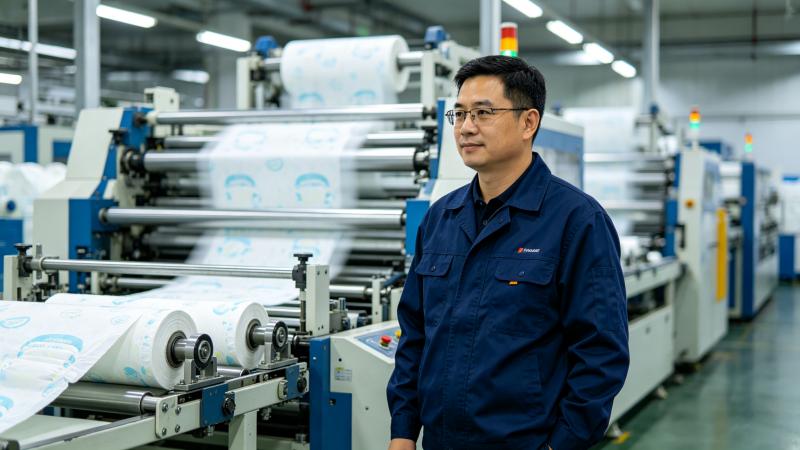
Understanding the production process and lead time for OEM adult pull up diapers is essential for effective inventory planning, timely product launches, and managing customer expectations. Adult pull up diaper production is a complex, multi-stage process that involves raw material sourcing, sample development, tooling and plate making, high-speed converting, quality control, packaging, inspection, and logistics. Each stage has its own timeline, dependencies, and potential bottlenecks. For OEM buyers, having a clear understanding of the production process and typical lead times — and knowing how to communicate effectively with the manufacturer to manage timelines — can mean the difference between a successful, on-time product launch and costly delays. This guide provides a detailed, step-by-step overview of the OEM adult pull up diaper production process, typical lead times for each stage, and strategies for reducing lead time and ensuring on-time delivery.
This article is part of our cluster on OEM adult pull up diapers manufacturer.
Overview of the Production Process
The OEM adult pull up diaper production process can be divided into eight major stages, from initial inquiry to final shipment. Each stage has specific activities, deliverables, and typical timelines. The total lead time from order confirmation to shipment is typically 30-45 days for standard private label orders, 45-60 days for custom OEM orders, and 60-90 days for ODM custom development. However, lead times can vary significantly based on order quantity, product complexity, manufacturer production schedule, raw material availability, and peak season factors.
| Stage | Key Activities | Typical Duration |
|---|---|---|
| 1. Sample Development & Approval | Product specification, custom sample production, testing, approval | 7-21 days |
| 2. Tooling & Plate Making | Packaging design finalization, printing plate making, cutting die, proofing | 7-14 days |
| 3. Raw Material Sourcing | SAP, pulp, non-woven, back sheet, elastic, adhesive procurement and incoming inspection | 7-14 days (parallel with stages 1-2) |
| 4. Converting Production | High-speed diaper converting: core forming, lamination, elastic attachment, folding, cutting | 5-15 days (depending on quantity) |
| 5. Packaging | Product counting, bagging, sealing, cartoning, palletizing, batch coding | 2-5 days |
| 6. Quality Inspection | Finished product testing, AQL inspection, third-party inspection (if required), product release | 3-7 days |
| 7. Documentation & Booking | Commercial invoice, packing list, certificate of origin, test reports, booking freight, customs declaration | 3-7 days |
| 8. Shipment | Trucking to port, loading, ocean/air freight, customs clearance at destination | 15-45 days (ocean, depending on destination) |
Note: Stages 1-3 often overlap (sample development, tooling, and raw material sourcing can proceed in parallel), so the total lead time is not simply the sum of all stages. The critical path (longest sequence of dependent activities) typically determines the total lead time.
Stage 1: Sample Development and Approval
Sample development is the first and most important stage of the production process, as it establishes the product specifications and quality standards that will govern mass production. Rushing sample approval or approving samples without thorough testing can lead to quality issues, production delays, and costly rework later in the process.
Sample Development Process
- Specification finalization (1-3 days): The buyer provides detailed product specifications, including size range, absorbency level, SAP content, fluff pulp content, top sheet material and basis weight, back sheet type, elastic type and strand count, leg cuff configuration, additional features (wetness indicator, odour control, skin care additives), and any regulatory or certification requirements. The manufacturer reviews the specifications and confirms feasibility, cost, and lead time.
- Sample production (3-7 days): The manufacturer produces custom samples based on the approved specifications. For standard configurations (using existing product molds and material specifications), samples can often be produced in 3-5 days. For custom configurations (custom core construction, custom elastic configuration, custom features), sample production may take 7-14 days, as it may require adjusting machine parameters, sourcing custom materials, or producing custom tooling.
- Sample testing (2-5 days): The manufacturer conducts internal testing of the samples, including absorption capacity, absorption rate, rewet, dimensions, tensile strength, and visual inspection. The buyer should also conduct their own testing of the samples, including absorption testing, fit evaluation (on dress forms or human wear testers), comfort assessment, and comparison against competitor products. For critical products, consider third-party testing (biocompatibility, chemical safety) during the sample stage.
- Sample review and revision (as needed): If the samples do not meet the buyer's requirements, the buyer provides detailed feedback (what is wrong, what the target is, any test data), and the manufacturer produces revised samples. Each revision cycle typically takes 3-7 days. It is common to go through 1-3 revision cycles before final sample approval. To minimize revisions, provide detailed specifications and clear feedback, and request samples of all sizes and configurations in the first round.
- Sample approval (1 day): Once the samples meet all requirements, the buyer provides written approval, including: signed physical samples (retained by both buyer and manufacturer), documented product specifications with all parameters and tolerances, test data for key performance metrics, and any special instructions or conditions. The approved samples become the reference standard for mass production and quality inspection.
Sample Costs
Sample costs vary by manufacturer and product complexity. Typical sample costs are:
- Standard samples (existing configuration): $50-$150 (including international shipping). Some manufacturers provide free standard samples for serious inquiries, with the buyer paying for shipping.
- Custom samples (custom materials or features): $150-$500 (including international shipping), due to additional material sourcing, machine setup, and testing. Custom sample costs are often refundable upon order placement (deducted from the first invoice).
- Third-party testing: $200-$800 per test (biocompatibility, chemical safety, absorption), depending on the test type and laboratory. Third-party testing is optional during the sample stage but recommended for critical product launches or when evaluating a new manufacturer.
Tips for Efficient Sample Development
- Provide detailed, written specifications from the beginning — do not rely on verbal descriptions or "make it like this competitor product" without specifying the key parameters.
- Request samples of all sizes and absorbency levels in the first round, not just one size — fit and performance can vary significantly between sizes.
- Test samples thoroughly before providing feedback — use objective test data (absorption capacity, rewet, dimensions) rather than subjective impressions alone.
- Provide specific, actionable feedback: "absorption capacity is 850ml, target is 1000ml; please increase SAP content from 12g to 15g" rather than "the diaper doesn't absorb well enough."
- Limit revision cycles to 2-3 rounds — if you cannot reach agreement after 3 rounds, the manufacturer may not have the capability to meet your requirements, and you should consider alternative manufacturers.
- Approve samples in writing with documented specifications — verbal approvals are not sufficient for quality control and dispute resolution.
Stage 2: Tooling and Plate Making
Tooling and plate making involves creating the custom tools and printing plates needed for production, primarily for custom packaging. This stage runs in parallel with sample development and raw material sourcing, but must be completed before packaging production can begin.
Packaging Design Finalization
Before tooling and plate making can begin, the packaging design must be finalized and approved. This includes: packaging structure (poly bag, carton, or both), packaging dimensions (based on product count per bag and product size), graphic design (brand logo, product images, marketing copy, regulatory information), and labeling requirements (product name, size, count, absorbency level, materials, warnings, manufacturer information, regulatory markings, barcodes, batch coding area). The buyer provides the packaging design files (typically AI, PDF, or EPS format) to the manufacturer, who reviews the files for printability and regulatory compliance. Any design revisions should be completed before plate making, as plate changes after production begins are costly and time-consuming.
Printing Plate Making
For custom-printed packaging (poly bags or cartons), printing plates must be made. For flexographic printing (the most common method for poly bag printing), plates are made from photopolymer material, exposed through a film negative, and processed to create a raised printing surface. Each color in the design requires a separate plate. Plate making typically takes 5-10 days, depending on the number of colors, plate size, and the plate maker's workload. Plate costs range from $200-$800 per color for poly bag printing, and $300-$1,000 per color for carton printing. For standard packaging designs (4-6 colors), total plate costs are typically $1,000-$4,000.
Cutting Dies and Forming Tools
If the packaging requires custom die-cutting (custom bag shape, custom carton structure, window patches, hang holes), cutting dies must be made. Cutting dies are typically made from steel rule blades mounted on a plywood or plastic base, and cost $300-$1,500 per design, depending on complexity. Standard rectangular bags and standard carton sizes use existing dies and incur no additional tooling cost. Custom product features (e.g., custom waistband shape, custom core shape) may require additional forming tools or machine modifications, costing $500-$3,000, though most adult pull up diaper configurations use standard forming tools.
Proofing and Approval
Before mass production of packaging, the manufacturer produces a printed proof (sample of the printed packaging) for the buyer's approval. The proof allows the buyer to verify that the colors, graphics, text, and layout are correct before mass production. Proofing typically takes 2-5 days after plate making is complete. The buyer should carefully review the proof for: color accuracy (compare to brand color standards), text accuracy (spelling, product information, regulatory markings), layout (element placement, barcode readability), and print quality (sharpness, registration). Any revisions at this stage require plate changes, which add cost ($100-$300 per plate) and time (3-5 days). Once the proof is approved, packaging production can begin.
Stage 3: Raw Material Sourcing and Incoming Inspection
Raw material sourcing is a critical stage that can significantly impact production lead time, particularly for custom or high-volume orders. The manufacturer must source all raw materials according to the approved product specifications, conduct incoming inspection, and have materials available before production can begin.
Key Raw Materials and Sourcing Times
- SAP (superabsorbent polymer): SAP is typically sourced from major suppliers (BASF, Evonik, Sumitomo, Formosa, Luxi) with lead times of 7-21 days, depending on the supplier, grade, and order quantity. Many manufacturers maintain inventory of standard SAP grades, reducing lead time to 1-3 days for standard grades. Custom SAP grades or large orders may require 14-21 days. SAP is the most critical and supply-constrained raw material — SAP shortages or price spikes can delay production and increase costs.
- Fluff pulp: Fluff pulp is typically sourced from Nordic or Canadian suppliers with lead times of 14-30 days (ocean freight from Europe or North America to China). Many manufacturers maintain 1-3 months of pulp inventory, reducing lead time to 1-3 days for standard grades. Custom pulp grades or very large orders may require 30-45 days.
- Non-woven fabrics (top sheet, leg cuffs, waistband, core wrap): Non-woven fabrics are typically sourced from domestic Chinese suppliers or imported from Japan/Korea, with lead times of 3-14 days. Standard non-woven specifications (spunbond, through-air bonded, standard basis weights) are often available from the manufacturer's inventory or local suppliers, reducing lead time to 1-3 days. Custom colors, basis weights, or treatments (hydrophilic, hydrophobic, lotion) may require 7-14 days.
- Back sheet (PE film or breathable composite): Back sheet film is typically sourced from domestic Chinese suppliers with lead times of 3-10 days. Standard PE film colors and thicknesses are often available from inventory. Custom colors, breathable composites, or printed back sheets may require 7-14 days.
- Elastics (waistband, leg cuffs): Elastic strands (spandex/Lycra or TPU) are typically sourced from domestic or imported suppliers with lead times of 3-14 days. Standard elastic specifications (denier, tension) are often available from inventory. Custom tension or latex-free requirements may require 7-14 days.
- Adhesives (construction, elastic attachment, core fixation): Hot-melt adhesives are typically sourced from domestic or imported suppliers (Henkel, Bostik, domestic) with lead times of 3-10 days. Standard adhesive grades are often available from inventory.
- Packaging materials (poly film, carton board): Packaging materials are typically sourced from domestic suppliers with lead times of 5-14 days, including printing and conversion. Custom packaging requires printing plate making (see Stage 2) before production can begin.
Incoming Inspection
Upon receipt of raw materials, the manufacturer's quality control department conducts incoming inspection according to documented procedures and acceptance criteria. Key incoming inspection tests include:
- SAP: Absorption capacity (CRC), absorption under pressure (AUP), absorption rate, residual monomer, moisture content, particle size distribution. Compare to supplier's COA and the manufacturer's acceptance criteria.
- Fluff pulp: Fiber length, impurity content, moisture content, absorption capacity. Visual inspection for contamination.
- Non-woven: Basis weight, tensile strength, liquid strike-through time (for top sheet), hydrophobicity (for leg cuffs), visual inspection for defects.
- Back sheet: Thickness, hydrostatic pressure (waterproofness), WVTR (for breathable), tensile strength, visual inspection for pinholes and defects.
- Elastics: Tension (modulus), stretch ratio, elastic recovery, latex content verification (if latex-free claimed).
- Adhesives: Viscosity, application temperature, color, odor. Compare to supplier's COA.
- Packaging materials: Print quality, color accuracy, text accuracy, sealing strength (for poly bags), compressive strength (for cartons), barcode readability.
Raw materials that fail incoming inspection are segregated, evaluated, and either returned to the supplier, used for non-critical applications (if acceptable), or disposed of. The manufacturer should maintain incoming inspection records for each raw material batch, and these records should be available for buyer review during factory audits or production monitoring.
Material Traceability
The manufacturer should maintain material traceability records linking each production batch to the raw material batches used (SAP batch number, pulp batch number, non-woven batch number, etc.). This allows the manufacturer and buyer to trace quality issues back to specific raw material batches, verify that the specified materials were actually used, and facilitate product recalls if necessary. Material traceability is a requirement of ISO 13485 and medical device regulations (EU MDR, FDA QSR). When placing an order, confirm that the manufacturer maintains material traceability and can provide traceability records for each production batch.
Stage 4: Converting Production
Converting production is the core manufacturing stage where raw materials are transformed into finished adult pull up diapers on high-speed converting lines. Understanding the converting process and production capacity is essential for estimating production lead time and managing production schedules.
Adult Pull Up Diaper Converting Line
A modern adult pull up diaper converting line is a complex, high-speed machine that integrates multiple stations to transform raw materials into finished diapers. The key stations and processes are:
- Core forming: Fluff pulp is fiberized (defibrated) and mixed with SAP particles in a forming chamber. The pulp-SAP mixture is deposited onto a forming wire or core wrap material in the shape of the absorbent core. Core weight, SAP distribution, and core dimensions are controlled at this station. Some lines use a "sandwich" core construction with SAP distributed in multiple layers for improved absorption.
- Core wrapping and compression: The formed core is wrapped in core wrap tissue or non-woven, then compressed to the desired thickness and density. Compression improves core integrity and reduces product thickness.
- Top sheet lamination: The top sheet non-woven is laminated to the top of the core using construction adhesive. The top sheet may be pre-treated with hydrophilic coating, lotion, or other additives.
- Back sheet lamination: The back sheet (PE film or breathable composite) is laminated to the bottom of the core using construction adhesive. If the back sheet is printed, the print side faces outward.
- Elastic attachment: Waistband elastic strands and leg cuff elastic strands are applied to the appropriate layers using elastic attachment adhesive. The elastic strands are stretched to the specified tension before attachment, creating the gathered (elasticated) effect when the product is at rest. Waistband elastic is typically applied to the waistband panels; leg cuff elastic is applied to the leg cuff non-woven.
- Leg cuff formation: The leg cuff non-woven (with elastic attached) is folded and bonded to the product body, creating the standing leg cuffs that prevent side leakage.
- Waistband formation: The front and back waistband panels (with elastic attached) are bonded to the product body, creating the waistband. For pull up diapers, the left and right side seams are bonded (ultrasonically or with adhesive) to create the underwear-style closed waistband. The side seams may be perforated for tear-away removal.
- Cutting: The continuous product web is cut into individual diapers at the cutting station. The cutting blade must be sharp and properly aligned to ensure clean cuts without tearing or fuzzing.
- Inspection and rejection: Many modern converting lines include online inspection systems (visual cameras, metal detectors, weight sensors) that detect and automatically reject defective products (misaligned components, missing elastic, foreign objects, incorrect weight).
- Output and stacking: Finished diapers are output from the converting line, counted, and stacked for packaging. Some lines include automatic stacking and packaging integration.
Production Speed and Capacity
Modern adult pull up diaper converting lines typically operate at speeds of 300-500 pieces per minute (ppm), with some high-speed lines reaching 600-800 ppm. Actual production speed depends on product size (larger sizes run slower), product complexity (more features = slower speed), and the manufacturer's quality requirements (slower speed for better quality control). At 400 ppm, a single line can produce approximately 24,000 pieces per hour, or 192,000 pieces per 8-hour shift, or 576,000 pieces per 24-hour day (3 shifts). However, actual production output is lower than theoretical capacity due to: machine setup and changeover time (between sizes, materials, or orders), planned maintenance, unplanned downtime (mechanical issues, material shortages), quality-related slowdowns, and break/shift change time. Typical effective production output is 60-80% of theoretical capacity, or approximately 350,000-460,000 pieces per day per line at 70% efficiency.
Production Time Estimation
Production time for a given order depends on order quantity, number of sizes, product complexity, and line availability. As a rough estimate:
- Order quantity 100,000 pieces (1-2 sizes): 1-2 days of production time (after setup and changeover).
- Order quantity 200,000 pieces (3-4 sizes): 2-4 days of production time (including size changeovers).
- Order quantity 500,000 pieces (4-5 sizes): 5-8 days of production time (including size changeovers and potential material replenishment).
- Order quantity 1,000,000+ pieces (4-6 sizes): 10-15 days of production time (may require scheduling across multiple lines or multiple weeks).
Note: These are production time estimates only — they do not include sample development, tooling, raw material sourcing, packaging, inspection, or logistics. The total lead time from order confirmation to shipment includes all stages.
Changeover Time
Changeover time is the time required to switch the converting line from one product configuration to another (e.g., from Medium to Large size, or from one customer's order to another). Changeover involves: adjusting machine parameters (core dimensions, elastic tension, cutting length), changing material rolls (different non-woven colors, back sheet prints, elastic specifications), cleaning and inspecting the line, and running test products to verify quality. Changeover time typically ranges from 1-4 hours, depending on the complexity of the change. For orders with multiple sizes, changeover time between sizes should be factored into the production schedule. To minimize changeover time and maximize production efficiency, manufacturers often schedule production by size (producing all of one size before changing to the next) rather than interleaving sizes.
Stage 5: Packaging
After converting production, the finished diapers are packaged into retail packaging (poly bags or cartons) and then into shipping cartons or pallets for distribution. Packaging is a critical stage that affects product presentation, protection, and regulatory compliance.
Packaging Process
- Product counting: Finished diapers are counted to the specified quantity per retail package (e.g., 12, 14, 18, 20, 24 pieces per bag). Counting may be done automatically (by the converting line or packaging machine) or manually (for small runs or special configurations).
- Bagging: The counted diapers are inserted into the retail poly bag. The bag may be pre-printed with the custom design. The diapers are typically folded or stacked to fit the bag dimensions.
- Sealing: The poly bag is sealed (heat-sealed or adhesive-sealed) to protect the product from contamination and moisture. For resealable bags, a resealable tape or zipper is applied. Sealing strength is verified to ensure the seal does not open during shipping and handling.
- Batch coding: Production batch number, production date, and expiration date (or "best before" date) are printed on each retail package (typically on the bottom or back of the bag) using inkjet or laser coding. Batch coding is essential for traceability and regulatory compliance.
- Cartoning: Retail packages are packed into shipping cartons (corrugated boxes) for protection during shipping. The number of retail packages per carton depends on package size and carton dimensions (typically 6-12 retail bags per carton). The shipping carton may be labeled with product information, quantity, batch number, and shipping marks.
- Palletizing: Shipping cartons are stacked onto pallets (typically 40-80 cartons per pallet, depending on carton size and weight) and wrapped with stretch film for stability during shipping. Pallet dimensions and weight should comply with standard shipping requirements (typically 120cm × 100cm EUR pallets or 120cm × 120cm, maximum height 180cm, maximum weight 1,000-1,200kg per pallet).
Packaging Quality Control
During packaging, the manufacturer's quality control personnel conduct periodic inspections to verify: product count per package (no undercount or overcount), packaging seal integrity (no leaks or open seals), batch coding accuracy and legibility, packaging print quality (no smudges, misprints, or damage), retail package appearance (no crushed or damaged packages), shipping carton labeling accuracy, and pallet stability. Defective packages are removed and reworked or discarded. Packaging inspection records should be maintained for each production batch.
Stage 6: Quality Inspection and Product Release
Quality inspection is the final gate before product release and shipment. It ensures that the finished products meet the approved specifications and quality standards, and that any defects are identified and addressed before the products leave the factory.
Finished Product Testing
The manufacturer's quality control department conducts finished product testing for each production batch (or for each size within a batch), including:
- Absorption capacity: Test per ISO 11948-1 or internal method. Verify against the approved specification (minimum capacity).
- Absorption rate: Time to absorb 100ml (first and second insult). Verify against specification (maximum time).
- Rewet: Amount of liquid released under pressure (0.3 psi and/or 0.7 psi). Verify against specification (maximum rewet).
- Dimensions: Product length, width, core dimensions, waistband relaxed/stretched dimensions, leg opening circumference. Verify against specification with tolerances.
- Weight: Product weight (total, core weight). Verify against specification. Core weight is an indirect indicator of SAP and pulp content.
- Visual inspection: Check for defects: misaligned components, missing elastic, loose threads, contamination, discoloration, packaging damage, print defects. Inspect a statistically significant sample per batch.
- Leakage test (optional): For critical products or new configurations, conduct leakage testing under simulated conditions (movement, pressure, multiple insults).
Finished product test results are documented in the batch record and reviewed by the quality manager before product release. Products that fail testing are segregated, evaluated, and either reworked (if possible), downgraded (if acceptable for a lower specification), or rejected and disposed of.
AQL Inspection
In addition to internal finished product testing, the manufacturer (or the buyer's third-party inspector) conducts AQL (Acceptable Quality Limit) inspection of the finished production batch. AQL inspection is a statistically based sampling method that determines whether a batch meets the specified quality level. For adult pull up diapers, typical AQL levels are:
- Critical defects (e.g., contamination, sharp objects, missing essential components): AQL 0 (zero tolerance — any critical defect results in batch rejection).
- Major defects (e.g., incorrect size, broken seal, significant print defect, absorption failure): AQL 2.5.
- Minor defects (e.g., minor cosmetic issues, slight dimension variation within tolerance): AQL 4.0.
AQL inspection is typically conducted by the manufacturer's QC team as part of finished product inspection. For first-time orders, high-value orders, or when working with a new manufacturer, the buyer should hire a third-party inspection company (SGS, Intertek, Bureau Veritas, or a local China inspection service) to conduct an independent AQL inspection before shipment. Third-party inspection typically costs $200-$500 per inspection day and provides an objective assessment of product quality.
Third-Party Inspection Types
- DUPRO (During Production Inspection): Conducted when 10-40% of production is complete. Verifies that production is proceeding according to specifications, identifies issues early, and allows for corrective action before the full batch is produced. Recommended for first-time orders or custom configurations.
- FRI (Final Random Inspection): Conducted when 100% of production is complete and packaged, before shipment. Verifies finished product quality, packaging, labeling, and quantity against the purchase order and approved samples. This is the most common type of pre-shipment inspection.
- Loading Supervision: Conducted during container loading to verify that the correct products and quantities are loaded, that packaging and palletizing are correct, and that the container is in good condition. Recommended for high-value orders or when there are concerns about shipping integrity.
Product Release
After all testing and inspection is complete and the products meet the approved specifications, the quality manager (or authorized release person) approves the batch for release. Product release is documented in the batch record with the release decision, release date, and authorized signature. Released products are moved to the finished goods warehouse and are available for shipment. Products that are not released (failed inspection) are segregated and handled according to the non-conforming product procedure.
Stage 7: Documentation and Freight Booking
After product release, the manufacturer prepares export documentation and arranges freight booking. This stage is critical for ensuring smooth customs clearance and on-time delivery.
Export Documentation
The manufacturer (or their freight forwarder) prepares the following export documentation:
- Commercial Invoice: Details the transaction: seller and buyer information, product description, quantity, unit price, total value, trade terms (EXW, FOB, CIF, etc.), payment terms, and currency. The commercial invoice is used for customs declaration and payment.
- Packing List: Details the packaging: number of cartons, pieces per carton, total pieces, carton dimensions, gross weight, net weight, and pallet information. The packing list is used for customs inspection and warehouse receiving.
- Bill of Lading (B/L) or Air Waybill (AWB): The transport document issued by the carrier (shipping line or airline) acknowledging receipt of the goods and specifying the terms of carriage. For ocean freight, the B/L is also a document of title (the holder of the original B/L can claim the goods). For air freight, the AWB is a transport document but not a document of title.
- Certificate of Origin (CO): Certifies the country of origin of the goods (China). The CO may be required for customs clearance in the destination country and for determining applicable import duty rates. The CO is typically issued by the China Council for the Promotion of International Trade (CCPIT) or the local customs authority. For preferential trade agreements (e.g., ASEAN-China FTA, RCEP), a preferential certificate of origin (Form E, Form RCEP) may be required to qualify for reduced import duties.
- Test Reports and Certificates: Copies of product test reports (absorption, biocompatibility, chemical safety), quality certificates (ISO 13485), and regulatory declarations (CE Declaration of Conformity, FDA registration) may be required for customs clearance or for the buyer's records.
- Other documents (as required by destination country): Some countries require additional documents, such as: import license, sanitary/health certificate, free sale certificate, conformity certificate (e.g., SONCAP for Nigeria, PVOC for Kenya, SASO for Saudi Arabia), or customs bond. The buyer should confirm the required documentation for their destination country before shipment.
Freight Booking and Shipping
The manufacturer (or the buyer's freight forwarder) books freight with a shipping line or airline. Key considerations include:
- Shipping method: Ocean freight (most economical, 15-45 days depending on destination) or air freight (fastest, 3-10 days, but significantly more expensive — typically 5-10x the cost of ocean freight). For adult pull up diapers (bulky, relatively low value per unit), ocean freight is the standard shipping method. Air freight is used only for urgent orders or small sample shipments.
- Container type: 20-foot container (approximately 25-30 CBM, 10-12 pallets), 40-foot standard container (approximately 55-60 CBM, 20-24 pallets), or 40-foot high cube container (approximately 65-70 CBM, 20-24 pallets with higher height). The container type depends on shipment volume and weight. Adult pull up diapers are bulky (low density), so container volume is typically the limiting factor rather than weight.
- Trade terms: EXW (Ex Works — buyer arranges all shipping from factory), FOB (Free On Board — seller delivers to port of shipment, buyer arranges ocean freight), CIF (Cost, Insurance, Freight — seller arranges and pays for ocean freight and insurance to destination port), DDP (Delivered Duty Paid — seller arranges all shipping, insurance, duties, and delivery to buyer's door). FOB is the most common trade term for OEM orders from China, as it gives the buyer control over ocean freight costs and carrier selection.
- Transit time: Ocean freight transit times from China (Xiamen, Shanghai, Shenzhen) to major destinations: US West Coast (12-18 days), US East Coast (25-35 days), Northern Europe (28-38 days), Mediterranean (22-30 days), Australia/New Zealand (10-18 days), Southeast Asia (5-10 days), Middle East (15-22 days). Transit times do not include customs clearance at destination, which can add 2-7 days.
Typical Total Lead Time Scenarios
Scenario 1: Standard Private Label Order (Existing Product, Custom Packaging Only)
- Sample development (existing configuration, custom branding): 7-10 days
- Packaging design finalization and plate making: 7-10 days (parallel with sample development)
- Raw material sourcing (standard materials from inventory): 1-3 days (parallel)
- Converting production (200,000 pieces, 3-4 sizes): 3-5 days
- Packaging: 2-3 days
- Quality inspection: 2-3 days
- Documentation and booking: 3-5 days
- Total factory lead time (order to shipment): 25-35 days
- Ocean freight to US/Europe: 15-35 days
- Total door-to-door: 40-70 days
Scenario 2: Custom OEM Order (Custom Materials/Features, Custom Packaging)
- Sample development (custom configuration, 1-2 revision cycles): 14-21 days
- Packaging design finalization and plate making: 7-14 days (parallel with sample development)
- Raw material sourcing (custom materials, 7-14 days lead time): 7-14 days (parallel with sample development, but must be complete before production)
- Converting production (300,000 pieces, 4 sizes): 5-8 days
- Packaging: 3-5 days
- Quality inspection (including third-party FRI): 3-7 days
- Documentation and booking: 3-5 days
- Total factory lead time (order to shipment): 35-50 days
- Ocean freight to US/Europe: 15-35 days
- Total door-to-door: 50-85 days
Scenario 3: ODM Custom Development (New Product Design from Scratch)
- Product design and specification development: 14-30 days (collaboration between buyer and manufacturer)
- Prototype development and testing (multiple rounds): 21-45 days
- Tooling development (custom molds, forming tools): 14-30 days
- Packaging design and plate making: 7-14 days (parallel)
- Raw material sourcing (custom materials): 14-21 days (parallel)
- Pilot production (small batch for validation): 5-10 days
- Pilot product testing and validation: 7-14 days
- Mass production (500,000 pieces, 4-5 sizes): 8-12 days
- Packaging: 3-5 days
- Quality inspection: 5-7 days
- Documentation and booking: 3-5 days
- Total factory lead time (design to shipment): 90-150 days
- Ocean freight to US/Europe: 15-35 days
- Total door-to-door: 105-185 days
How to Reduce Lead Time
1. Plan Ahead and Provide Accurate Forecasts
The most effective way to reduce lead time is to plan ahead and provide the manufacturer with accurate demand forecasts. If the manufacturer knows your expected order quantities and timing in advance, they can: reserve production capacity on the converting line, pre-order long-lead-time raw materials (SAP, pulp) before you place the formal order, and schedule tooling and plate making in advance. Providing a rolling 3-6 month demand forecast (even if approximate) allows the manufacturer to plan production and raw material inventory, reducing lead time for repeat orders to 15-25 days (from 30-45 days for first-time orders).
2. Use Standard Configurations and Materials
Custom configurations and materials require longer sample development, raw material sourcing, and production setup times. Using the manufacturer's standard product configurations (existing core construction, elastic configuration, material specifications) with custom branding (packaging, logo) significantly reduces lead time, as the manufacturer can produce samples quickly (3-5 days), source materials from inventory (1-3 days), and set up production efficiently. For first-time orders or when speed is critical, start with a standard configuration and customize only the packaging and branding. Custom materials and features can be added in later orders as the product line matures.
3. Finalize Packaging Design Early
Packaging design finalization and plate making are often on the critical path for production lead time, as packaging cannot be produced until the design is finalized and plates are made. Delays in packaging design (revisions, approvals, file formatting) can delay the entire order. To avoid this: finalize packaging design before or during sample development (not after), provide print-ready design files (AI, PDF, EPS with embedded fonts and images), minimize design revisions after plate making, and approve packaging proofs promptly (within 1-2 days of receipt). If packaging design is not ready, consider using the manufacturer's stock packaging for the first order and switching to custom packaging for the second order.
4. Consolidate Orders and Reduce Size Changes
Each size change on the converting line requires changeover time (1-4 hours), reducing effective production output. Consolidating orders (fewer, larger orders rather than many small orders) and minimizing the number of sizes per production run reduces changeover time and increases production efficiency. For example, producing 200,000 pieces of one size takes 1-2 days, while producing 50,000 pieces each of four sizes takes 3-5 days (including 3 changeovers). If possible, schedule production by size (produce all of one size before changing to the next) and provide the manufacturer with a size production sequence that minimizes changeover complexity.
5. Maintain Good Communication and Responsiveness
Many production delays are caused by communication gaps: the manufacturer has a question about specifications, packaging, or approvals, and the buyer takes several days to respond. Each day of delay in communication adds a day to the lead time. To avoid this: designate a single point of contact for the order (both buyer and manufacturer), respond to manufacturer inquiries within 24 hours (or specify expected response times), provide clear, written instructions and approvals (avoid verbal approvals or ambiguous instructions), and schedule regular production update calls or emails (e.g., weekly updates during production) to identify and address issues early.
6. Use Air Freight for Urgent Orders (If Budget Allows)
For urgent orders or when ocean freight lead time is too long, air freight can reduce transit time from 15-35 days (ocean) to 3-10 days (air). However, air freight is significantly more expensive (typically 5-10x the cost of ocean freight for bulky products like adult diapers), so it should be used only for urgent small shipments or when the cost of delay (lost sales, customer penalties) exceeds the additional freight cost. For larger urgent orders, consider a split shipment: ship a portion by air to meet immediate demand, and the remainder by ocean for cost efficiency.
Frequently Asked Questions
What is the typical lead time for OEM adult pull up diapers?
Total lead time from order confirmation to shipment (factory lead time) is typically 30-45 days for standard private label orders (existing product configuration, custom packaging), and 45-60 days for custom OEM orders (custom materials or features, custom packaging). ODM custom development (new product design from scratch) takes 60-90 days or more. After shipment, ocean freight transit time is 15-35 days to US/Europe, 10-18 days to Australia, 5-10 days to Southeast Asia. Total door-to-door lead time is typically 45-80 days for standard orders. Lead times can be longer during peak production seasons (Q4, before Chinese New Year) or when raw material supply is constrained.
What is the minimum order quantity (MOQ)?
MOQ varies by manufacturer and product configuration. Standard private label (existing design, custom packaging only) typically has MOQ of 50,000-100,000 pieces per size. Custom OEM (custom materials or features) typically has MOQ of 100,000-200,000 pieces per size. Most manufacturers allow combined MOQ across sizes (e.g., 200,000 total pieces across 4 sizes) for first-time orders. Some manufacturers offer reduced MOQs (30,000-50,000 pieces) for first-time partners at a higher unit cost. MOQ for custom packaging is typically 10,000-20,000 units per design for poly bags, and 3,000-10,000 units for cartons. Always confirm MOQ with the manufacturer before placing an order, and negotiate combined MOQ across sizes if your total volume is limited.
How long does sample development take?
Sample development typically takes 7-21 days, depending on product complexity: (1) Standard samples (existing product configuration, no custom features): 3-7 days for sample production, plus 2-5 days for shipping and testing. Total: 7-12 days. (2) Custom samples (custom materials, custom absorbency, custom features): 7-14 days for sample production (may require material sourcing and machine setup), plus 2-5 days for shipping and testing. Total: 10-19 days. (3) ODM prototype (new product design): 14-30 days per prototype round, with multiple rounds typically required. Each revision cycle adds 3-7 days. To minimize sample development time, provide detailed written specifications from the beginning, request all sizes/configurations in the first round, and provide specific, actionable feedback based on objective test data.
What is the production capacity of a typical adult diaper factory?
A modern adult pull up diaper converting line typically operates at 300-500 pieces per minute (ppm), with high-speed lines reaching 600-800 ppm. At 400 ppm and 70% effective efficiency (accounting for setup, maintenance, downtime, and breaks), a single line produces approximately 400,000 pieces per day (24-hour operation, 3 shifts) or 12 million pieces per month. A medium-sized factory with 3-5 adult diaper lines has monthly production capacity of 36-60 million pieces. A large factory with 10+ lines has monthly capacity of 120+ million pieces. However, actual available capacity depends on the manufacturer's current order book, production schedule, and the number of lines dedicated to adult products (some factories produce both baby and adult diapers on the same lines). When evaluating a manufacturer, ask about their current adult diaper production capacity, the number of dedicated adult lines, and their available production slots for your order timeline.
How can I track production progress?
You can track production progress through: (1) Regular updates from the manufacturer's sales/project manager — request weekly production updates via email or call, including current stage, progress percentage, any issues or delays, and expected completion date. (2) Production photos and videos — ask the manufacturer to provide photos or short videos of the production line, raw materials, in-process products, and finished products. (3) During-production inspection (DUPRO) — hire a third-party inspector to visit the factory during production and provide a detailed report on production status, product quality, and any issues. (4) Factory visit — if possible, visit the factory during production to observe the process firsthand and meet the production and quality teams. (5) Batch records — after production is complete, request copies of the production batch records (raw material usage, production parameters, in-process inspection results, finished product test results) for your records and quality verification.
What should I do if production is delayed?
If production is delayed, take the following steps: (1) Get a clear explanation from the manufacturer — ask for the specific cause of the delay (raw material shortage, machine issue, quality issue, production schedule conflict, packaging delay), the current status, and a revised, realistic completion date. (2) Assess the impact — determine how the delay affects your product launch, inventory, customer commitments, and marketing plans. (3) Request mitigation measures — ask the manufacturer to prioritize your order (e.g., move to a different line, add shifts, expedite raw materials), or to split the shipment (ship part of the order early to meet immediate demand, with the remainder following). (4) Document everything — keep records of all communications, revised timelines, and any agreements or commitments from the manufacturer. (5) Plan for contingencies — if the delay is significant, consider air freight for a portion of the order, adjusting your launch timeline, or sourcing from a backup manufacturer for future orders. (6) Address the root cause for future orders — if the delay is due to a systemic issue (e.g., chronic raw material shortages, unreliable production scheduling), consider whether the manufacturer can meet your long-term needs, and develop a backup sourcing plan. Most importantly, maintain a constructive, problem-solving relationship with the manufacturer — delays are often due to factors outside the manufacturer's control, and working together to find solutions is more effective than assigning blame.
Conclusion
The OEM adult pull up diaper production process is a complex, multi-stage process that requires careful planning, clear communication, and rigorous quality control at every stage. From sample development and tooling to raw material sourcing, high-speed converting, packaging, inspection, and logistics, each stage has its own timeline, dependencies, and potential bottlenecks. By understanding the production process and typical lead times, providing detailed specifications and accurate forecasts, finalizing packaging design early, using standard configurations when speed is critical, and maintaining open communication with the manufacturer, buyers can minimize lead times, ensure on-time delivery, and produce high-quality adult pull up diapers that meet their specifications and satisfy their customers. With proper planning and a reliable manufacturing partner, OEM adult pull up diaper production can be a smooth, efficient process that supports successful product launches and long-term business growth.