
Panty liner OEM specification guide for private label brands: product dimensions, ultra-thin technology, raw materials, manufacturing process, certifications, cost structure and manufacturer selection.
Panty Liner OEM: Ultra-Thin Specification Guide for Private Label Brands
For a complete guide to selecting a feminine care OEM manufacturer in China, read our Feminine Care OEM Guide.
Panty liners are the fastest-growing segment in feminine care, driven by rising demand for everyday freshness, discreet protection, and eco-friendly options. For brand owners and importers looking to launch a private label panty liner line, understanding product specifications, manufacturing processes, and material choices is essential. This guide covers everything OEM buyers need to know.
1. Panty Liner Market Overview
Panty liners (also called pantyliners or daily liners) are thin, absorbent pads designed for everyday wear, light spotting, or as a backup to tampons and menstrual cups. Key market trends include:
- Ultra-thin formats: Consumers increasingly prefer liners under 2mm thickness for discretion and comfort
- Organic and natural claims: Cotton top sheets, fragrance-free, and chlorine-free positioning drive premium segments
- Eco-friendly options: Biodegradable materials, compostable packaging, and plastic-free alternatives
- Functional variants: pH-balancing, odor-neutralizing, and antibacterial formulations
- Emerging markets: Middle East, Africa, and Southeast Asia show strong growth as feminine care penetration increases
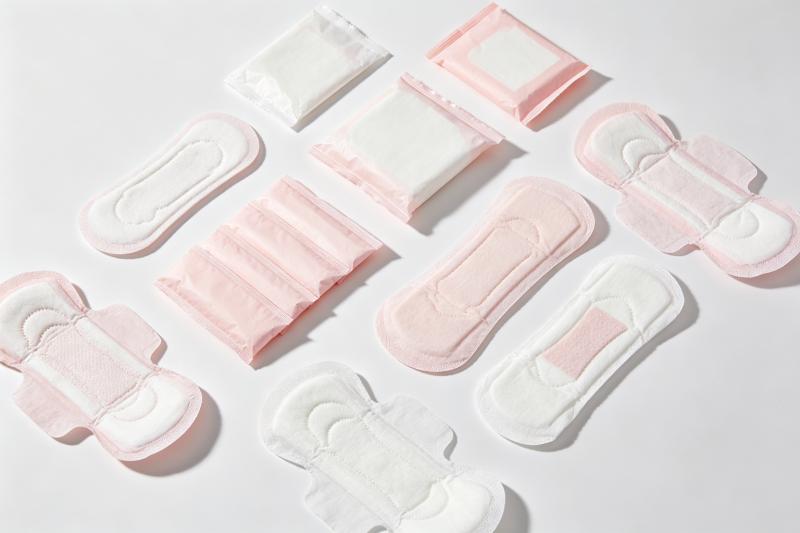
2. Product Specifications
2.1 Standard Dimensions
| Format | Length | Width | Thickness | Typical Use |
|---|---|---|---|---|
| Regular | 150-160mm | 55-65mm | 1.5-3.0mm | Everyday freshness |
| Long | 170-180mm | 60-70mm | 1.5-3.0mm | Light flow, extra coverage |
| Extra Long | 190-210mm | 65-75mm | 2.0-3.5mm | Postpartum, backup protection |
| Thong/G-String | 140-155mm | 45-55mm (tapered) | 1.0-2.0mm | Thong underwear compatibility |
| Curved/Contoured | 155-175mm | 60-70mm | 1.5-2.5mm | Anatomical fit, no shifting |
2.2 Absorbency Capacity
Panty liners typically have absorbency ratings of 1-3ml (regular) to 3-5ml (long/extra long). Unlike sanitary pads, liners are not designed for heavy menstrual flow. Absorbency is achieved through a combination of:
- Airlaid paper core (100-300 GSM)
- Small amount of superabsorbent polymer (SAP) for enhanced formats (0.5-2.0g per liner)
- Tissue paper wrapping for core integrity
2.3 Ultra-Thin Technology
Ultra-thin liners (under 2mm) require specialized manufacturing techniques:
- Thin airlaid core: Low-basis-weight airlaid paper (80-150 GSM) with optimized fiber density
- SAP spraying: Instead of SAP mixing in the core, SAP is sprayed in a thin, uniform layer for maximum absorption with minimal thickness
- Thermal bonding: Heat-activated bonding replaces traditional glue, reducing overall thickness
- Compression calendaring: Controlled compression after core formation achieves target thickness while maintaining absorbency
- Ultra-soft top sheet: 15-25 GSM nonwoven top sheet with micro-perforation for quick liquid acquisition
3. Raw Materials
3.1 Top Sheet (Acquisition Layer)
The top sheet is the layer in contact with skin. Options include:
- Polypropylene (PP) nonwoven: Most common, cost-effective, soft feel. 15-25 GSM, typically through-air bonded (TAB) or spunbond
- Polyethylene (PE) perforated film: Provides dry feel and quick acquisition, but less soft than nonwoven. Used in economy formats
- Cotton nonwoven: Premium option, natural softness, suitable for organic/sensitive skin positioning. Higher cost
- Bamboo fiber nonwoven: Eco-friendly premium option with natural antibacterial properties
Top sheet treatments may include aloe vera, vitamin E, chamomile extract, or pH-balancing lotions for added skincare benefits.
3.2 Absorbent Core
- Airlaid paper: Primary absorbent material, made from cellulose fluff pulp. 80-300 GSM depending on format
- Superabsorbent polymer (SAP): Sodium polyacrylate granules, 0.5-2.0g per liner for enhanced formats. Provides gel-lock technology to prevent rewet
- Tissue paper: Wraps the core for integrity and prevents SAP leakage. 12-18 GSM
3.3 Back Sheet (Barrier Layer)
- PE film: Standard liquid-proof barrier. 15-25 GSM, available in various colors and prints
- Breathable PE film: Microporous film allows air circulation while preventing liquid penetration. Reduces skin irritation and discomfort
- Biodegradable film: PLA (polylactic acid) or bio-PE for eco-friendly positioning. Higher cost, may require composting conditions
- Nonwoven/PE laminate: Premium soft back sheet with cloth-like feel
3.4 Adhesive and Release Paper
- Pressure-sensitive adhesive (PSA): Applied to the back sheet for securing to underwear. Must be skin-safe, hypoallergenic, and provide secure hold without leaving residue
- Release paper: Silicone-coated paper protecting the adhesive until use. 40-60 GSM, may be printed with brand messaging
- Wrapping material: Individual wrap options include PE film, paper, or biodegradable materials. Folded formats (C-fold, tri-fold) for compact packaging
4. Manufacturing Process
4.1 Converting Line Process
Panty liner production uses a high-speed converting line that transforms raw materials into finished, packaged liners:
- Unwinding: Raw material rolls (top sheet, back sheet, airlaid, tissue, release paper) are loaded and unwound at line speeds of 300-800 pieces per minute
- Core formation: Airlaid paper is cut to size, SAP is applied (if used), and the core is wrapped in tissue paper
- Lamination: Top sheet and back sheet are laminated around the core using hot melt adhesive or thermal bonding
- Adhesive application: Pressure-sensitive adhesive is applied to the back sheet in a pattern (full strip, center strip, or two side strips)
- Cutting: The continuous web is cut to individual liner dimensions using rotary knives
- Folding: Liners are folded (C-fold, tri-fold, or flat) and release paper is applied
- Individual wrapping: Each liner is wrapped in its individual packaging material and sealed
- Counting and stacking: Wrapped liners are counted and stacked into the desired pack count (20, 30, 40, 60, or 100 per pack)
- Final packaging: Stacks are inserted into outer packaging (plastic pouch, cardboard box, or recyclable paper box) and sealed
- Cartoning and palletizing: Finished packs are cartoned and palletized for shipping
4.2 Quality Control Points
- Raw material inspection upon arrival (COA verification, visual inspection, dimensional checks)
- In-process monitoring of adhesive application weight, core placement, and seal integrity
- Continuous vision system inspection for defects (holes, misalignment, missing adhesive)
- Finished product testing: absorbency capacity, rewet value, adhesive peel strength, dimensional accuracy
- Microbiological testing per ISO 11607 / USP 61 standards
- Packaging integrity: seal strength, burst test, drop test
5. Certifications and Compliance
| Certification | Requirement | Target Market |
|---|---|---|
| ISO 9001 | Quality management system | Global |
| ISO 13485 | Medical device quality management (for medical-grade liners) | EU, medical channels |
| ISO 22716 (GMP) | Cosmetic Good Manufacturing Practices | EU, cosmetic positioning |
| CE Marking | EU health, safety, and environmental standards | European Union |
| FDA Registration | FDA facility registration and product listing | United States |
| OEKO-TEX 100 | Textile free from harmful substances (for nonwoven materials) | Premium/organic positioning |
| GOTS Certified | Global Organic Textile Standard (for cotton materials) | Organic positioning |
| Halal Certified | Ingredients and process comply with Islamic law | Middle East, Southeast Asia |
| Vegan Certified | No animal-derived ingredients or testing | Premium/ethical positioning |
| Cruelty-Free | No animal testing | Premium/ethical positioning |
6. OEM/ODM Customization Options
6.1 Private Label (OEM)
- Custom branding on individual wraps and outer packaging
- Choice from manufacturer's existing formula and material library
- Custom pack sizes and counts
- Typical MOQ: 500,000 pcs per SKU
- Lead time: 30-45 days after artwork approval
6.2 Custom Development (ODM)
- Custom product specifications (dimensions, thickness, absorbency)
- Custom material selection (organic cotton, bamboo, biodegradable films)
- Custom top sheet treatments (aloe, chamomile, pH-balancing)
- Unique fragrance development (or fragrance-free)
- Custom packaging formats (recyclable paper boxes, compostable wraps)
- Typical MOQ: 500,000 pcs per SKU
- Development time: 4-8 weeks (including stability testing)
- Lead time: 45-60 days after approval
6.3 Packaging Customization
- Individual wrap: PE film, paper, biodegradable PLA; up to 8-color printing
- Outer packaging: flexible pouch with resealable label, cardboard box, or recyclable paper box
- Special finishes: matte, soft-touch, embossing, spot UV
- Pack counts: 10 (travel), 20, 30, 40, 60, 100 (value)
- Multi-pack formats: 2-in-1, 3-in-1, or variety packs
7. Cost Structure and Pricing
Panty liner manufacturing costs are driven by:
- Material choices: Upgrading from standard PP nonwoven to organic cotton can increase material cost by 40-60%
- SAP content: Enhanced formats with SAP cost 15-25% more than non-SAP formats
- Packaging complexity: Individual wraps, custom boxes, and special finishes add cost
- Order volume: Full container pricing vs. MOQ pricing can differ by 15-20%
- Certification requirements: Organic, biodegradable, and medical-grade certifications require premium materials and additional testing
As a rough benchmark, standard regular panty liners (PP nonwoven, no SAP, 40-count resealable pouch) in full container volumes typically range from $0.10 to $0.20 FOB per pack. Premium organic cotton formats with biodegradable packaging can range from $0.30 to $0.55 per pack.
8. How to Select a Panty Liner Manufacturer
- Dedicated feminine care lines: Verify the manufacturer has dedicated panty liner converting lines, not just shared sanitary pad lines. New Yifa Group operates multiple high-speed feminine care lines with annual capacity exceeding 1 billion pieces
- Cleanroom production: Feminine care products should be manufactured in a controlled cleanroom environment (Class 100,000 or better) to ensure microbiological safety
- Material sourcing: Verify reliable sourcing for key materials (nonwoven, SAP, adhesive). Premium organic certifications require traceable supply chains
- Development capabilities: For ODM projects, verify the manufacturer has R&D teams for custom product development and formulation
- Quality track record: Request references from existing clients, particularly in your target market. Ask about rejection rates and on-time delivery performance
- Certification portfolio: Verify relevant certifications (ISO 9001, ISO 13485, GMP, FDA, CE, OEKO-TEX, GOTS) are current and applicable to feminine care production
- Sustainability options: If eco-friendly positioning is part of your strategy, verify the manufacturer offers biodegradable materials, recyclable packaging, and carbon footprint reporting
9. Common Pitfalls to Avoid
- Ignoring skin sensitivity testing: Always require dermatological testing and hypoallergenic verification, especially for fragranced or treated top sheets
- Overlooking adhesive quality: Poor adhesive can cause liners to shift or leave residue on underwear. Specify adhesive type, peel strength range, and skin-safe certification
- Underestimating packaging lead times: Custom packaging materials (especially biodegradable or recycled options) may have longer lead times. Factor this into your launch timeline
- Skipping pre-production samples: Always request and approve pre-production samples (PPS) before mass production. Verify fit, feel, absorbency, adhesive performance, and packaging quality against your specifications
- Not specifying storage conditions: Feminine care products should be stored in cool, dry conditions. Specify storage requirements on packaging and verify your logistics partner can maintain the supply chain
Looking for an OEM Partner?
New Yifa Group is a leading hygiene product manufacturer in China since 1994, with 68 production lines and exports to 88+ countries. We offer OEM/ODM services for panty liners, sanitary pads, and period pants with low MOQ, custom packaging, and ISO 13485/CE/FDA certification.
Explore our feminine care OEM capabilities | Request a free quote