
If you're sourcing baby diapers for a private label brand, you've probably realized that "OEM manufacturer" is a very broad label. Some factories are basically trading companies with a rented production line. Others have been running their own lines since the 1990s and can show you the maintenance logs for each machine.
I've been in this industry since 1994. Our group runs 68 production lines across a 230,000 m² facility in Putian, Fujian — the same city where a significant portion of the world's disposable hygiene products are actually made. This isn't a sales pitch. It's a field guide to what actually matters when you're choosing a manufacturing partner, and what most online "buyer's guides" get wrong.
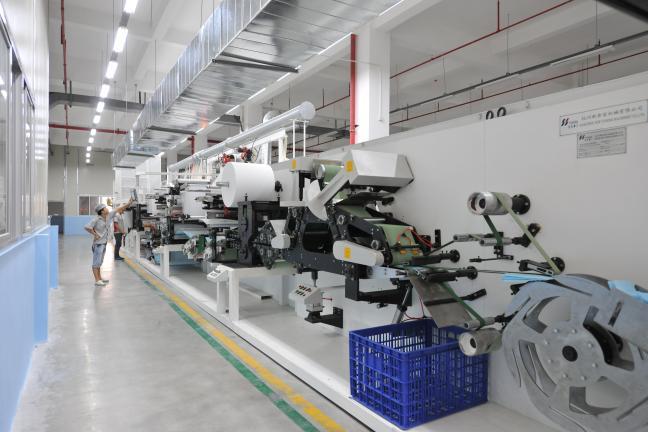
The Fujian Factor Most Buyers Overlook
There's a reason so many hygiene product manufacturers cluster in Fujian province. It's not just cheap labor — that advantage largely disappeared a decade ago. The real edge is the supply chain density. SAP (superabsorbent polymer) suppliers, spunbond nonwoven mills, and PE film plants are all within a 50km radius of Putian. When raw material costs move, a factory in this cluster feels it last and passes it on slowest.
If you're comparing quotes between a manufacturer in Fujian and one in, say, Guangdong or Zhejiang, the Fujian quote will often be 3-7% lower on like-for-like specifications — not because of labor arbitrage, but because the inbound logistics on raw materials are simply shorter.
This is also why minimum order quantities (MOQs) in this region tend to be more negotiable. The local supply chain can handle smaller batch raw material orders without the supplier charging a premium that gets passed to you.
What "ISO Certified" Actually Means (and What It Doesn't)
Every Chinese manufacturer's website says "ISO 9001 certified." Fewer than half of them can show you a valid certificate that matches the legal entity operating the production line you're actually touring.
Here's the practical check: ask for the certificate number and verify it directly with the issuing body (CQC, SGS, TÜV, NQA). A legitimate manufacturer won't hesitate. While you're at it, ask whether they hold ISO 13485 — that's the medical device quality management standard. If you're planning to sell in the EU or register your product as a medical device in any market, ISO 13485 isn't optional. It's the difference between "this factory follows a quality system" and "this factory's quality system is audited against medical device regulations."
At our facility, the ISO 13485:2016 certificate is audited annually by NQA. We also hold CE (EU MDR Class I), FDA establishment registration, and BSCI social compliance. But here's what those certificates don't tell you: they don't tell you whether the factory runs in-line QC every 30 minutes (we do), or whether they test every batch for absorbency under load (we do), or whether they'll let you send a third-party inspector like SGS or Intertek to witness the final random inspection (we will).
MOQ: The Number That Gets Quoted and Then Moved
Most factories will tell you their MOQ is 100,000 pieces per SKU. Then, when you push back, they'll say "well, for a first order, we can discuss."
Here's the reality. A standard baby diaper production line runs at roughly 400-600 pieces per minute. A 150,000-piece MOQ fills about 4-6 hours of line time — that's the economic minimum where the line changeover cost (cleaning, recalibrating SAP dosing, changing print rolls) doesn't eat the margin. If a factory quotes you 10,000 pieces MOQ, either they're subcontracting your order to a smaller line (which means you're not getting the quality control of a main line), or they're losing money on the setup and will cut corners somewhere.
Our standard MOQ is 150,000 pieces per SKU for baby diapers and pants. Can we go lower for a first trial order? Sometimes — if we can batch your order with another client's similar specification. But I'd rather be upfront about what the economics actually are than quote you a number we can't sustain.
For reference, here's what we actually run across product categories:
| Product | Standard MOQ | Trial Order Minimum |
|---|---|---|
| Baby diapers / pants | 150,000 pcs/SKU | 100,000 pcs (negotiable) |
| Adult diapers / pants | 50,000 pcs/SKU | 30,000 pcs (negotiable) |
| Sanitary pads | 300,000 pcs/SKU | 200,000 pcs |
| Wet wipes | 30,000 packs | 20,000 packs |
The Sampling Process: Where Most Partnerships Succeed or Fail
A factory's willingness to sample — and how they handle sampling — tells you more than any factory tour.
Here's what a proper sampling process looks like:
- You send specifications — target market, absorbency requirements, size distribution, any regulatory constraints (e.g., "must pass EU REACH"). A good manufacturer responds within 1-2 days with a feasibility assessment and a ballpark FOB price range.
- They produce a lab sample — not a production-line sample, a lab sample. This takes 5-7 days. The lab sample uses the same materials and construction as the production run will, but it's made in small batches on pilot equipment. This is the sample you test, fit-check, and decide whether to proceed with.
- You test and feedback — 3-5 days. If you need changes (softer topsheet, higher SAP ratio, different tape system), this is where you specify them.
- They produce a pre-production sample — this one comes off the actual production line that will run your order, using the finalized specifications. This is the "gold sample" that gets sealed and referenced throughout the production run.
If a manufacturer offers to "send you some samples from stock" as their sampling process, they're not doing custom OEM. They're selling you a stock product with your logo printed on the backsheet. There's nothing wrong with that business model, but call it what it is.
We provide free presampling samples (express freight collected by client). The lab development fee for custom-formula products is deductible against your first production order. It typically takes 5-7 working days from specification confirmation to sample dispatch.
Lead Time Reality Check
The "15-25 days" lead time you see on websites? That's the production phase only. It doesn't include:
- Packaging design and artwork approval: 5-7 days
- Pre-production sample confirmation: 3-5 days
- Raw material procurement (if your order uses specialty materials not in regular stock): add 5-10 days
So the realistic timeline from order confirmation to ex-works is 20-30 days, not 15. Any manufacturer quoting 10 days is either running stock product (not true OEM) or skipping QC steps.
For our OEM baby diaper manufacturing process, the typical breakdown is:
| Phase | Duration |
|---|---|
| Inquiry to quotation | 1-2 days |
| Sampling (lab sample) | 5-7 days |
| Sample confirmation | 3-5 days |
| Packaging design | 5-7 days |
| Bulk production | 10-15 days |
| Final inspection & shipping | 2-3 days |
What to Look for on a Factory Tour (That Most Buyers Miss)
Everyone looks at the production lines. Fewer people look at these three things:
1. The raw material incoming QC area. Are incoming SAP, nonwoven, and PE film batches tested before they enter production? At minimum, SAP should be tested for free swell capacity (ISO 17190-6), nonwoven for tensile strength, and PE film for breathability and pinhole defects. If the factory can't show you an incoming QC log with actual test data, their "quality control" is visual inspection only.
2. The SAP dosing calibration log. SAP dosing is the single biggest variable in diaper performance. Too little and the product leaks. Too much and you're overspending on raw material. A well-run line is calibrated every 30 minutes during a production run. Ask to see the calibration log for the line that would run your product.
3. The finished goods warehouse humidity control. Diapers are hydroscopic. If the warehouse doesn't control humidity, your product can gain weight (and lose performance) between ex-works and arrival at the destination port. Our warehouse maintains 45-55% RH year-round.
Private Label Packaging: The Part Most Guides Forget
Your packaging is the first thing a consumer interacts with. It's also the part of the OEM process that causes the most delays.
A few practical notes:
- PE bag artwork typically takes 3-5 days to design if you're providing a logo and basic requirements. If you need structural packaging design (stand-up pouches, box formats), budget 7-10 days.
- Regulatory compliance printing — if you're selling in the EU, your packaging needs to display the CE mark, a UDI (Unique Device Identifier) if classified as medical device, and the manufacturer's address. If you're selling in the US, CPSIA tracking label requirements apply. A good OEM partner will flag these requirements during the design phase, not after you've already printed 50,000 bags.
- Barcode assignment — you'll need unique GTINs (Global Trade Item Numbers) for each SKU. If you don't have them, your OEM partner should be able to guide you through GS1 registration, or at minimum tell you what's needed.
Our in-house design team handles PE bag artwork, carton design, and display-ready packaging. We also provide UPC/EAN barcode assignment support and compile the full export documentation package (Certificate of Origin, Bill of Lading, Commercial Invoice, Packing List).
The 88-Country Question
You'll see "exported to 88+ countries" on our website and on several of our competitors' websites. It's a real number — but it deserves context.
"Exported to" doesn't mean "have active distributor relationships in." For some of those 88 countries, the answer is: we shipped one container to a trading company in Dubai that re-exported it. For others, we have direct, multi-year relationships with local distributors who reorder quarterly.
If you're entering a market where we already have a distributor, we'll tell you. We don't dual-distribute in the same territory — it's bad for everyone. If you're entering a market where we don't have active distribution, we can usually provide market-specific formulation guidance (e.g., "in the Middle East, buyers prefer higher SAP ratios because of climate") based on what's worked in adjacent markets.
Questions to Ask Before You Sign
If you're in the evaluation phase, here are the questions that tend to separate the real manufacturers from the intermediaries:
- "Can I see the maintenance log for the production line that would run my order?" A real factory can show you this. An intermediary will hesitate or redirect.
- "What's your SAP supplier, and can I specify a different one?" Most factories have 1-2 preferred SAP suppliers. If you have a specific performance requirement, can they accommodate?
- "Can I appoint a third-party inspector for final random inspection?" The answer should be yes. If it's no, ask why.
- "What's your AQL standard for finished product inspection?" The industry standard is AQL 1.5 for critical defects, AQL 2.5 for major defects. If they don't know what AQL is, keep looking.
- "Can you provide the technical file and Declaration of Conformity needed for [your target market]?" If they don't know what a DoC is, they haven't exported to regulated markets.
Final Thought
The cheapest FOB price rarely turns out to be the cheapest total cost. Air freight for a delayed shipment, replacement costs for a container that failed inspection, and the opportunity cost of a launch delayed by two months — those add up fast.
What you're actually buying from an OEM manufacturer is risk reduction. The right partner reduces the variables you have to worry about. That's worth more than $0.005 per piece.
If you're evaluating manufacturers and want to talk through specifications, MOQ flexibility, or formulation options, you can reach our team at +86 181 5938 0105 or sales@newyifagroup.com. We also offer scheduled factory tours in Putian — seeing the lines running in person answers most of the questions that a website can't.
References
- ISO 17190-6:2020 — Determination of free-swell capacity of superabsorbent powders and granules
- ISO 11948-1:1996 — Absorption capacity of menstrual tampons (referenced for absorbency test methodology)
- ANSI/ASQ Z1.4 — Sampling procedures for inspection by attributes
- EU MDR 2017/745 — Medical Device Regulation (applicable to adult incontinence products and diapers marketed as medical devices in the EU)
This article reflects the author's experience in hygiene product manufacturing since 1994. The specifications, lead times, and MOQs mentioned are based on actual production data from New Yifa Group's Putian facility. Individual results may vary based on formulation complexity and order timing.